
For long-lasting durability in your modern home, you’ll find engineered quartz, natural granite, stainless steel, quartzite, and porcelain leading the pack. These premium materials offer exceptional resistance to scratches, heat, and daily wear while delivering striking aesthetics. Quartz and porcelain require minimal maintenance, while granite and quartzite showcase nature’s resilience. Stainless steel brings professional-grade performance to residential spaces. Each material’s unique properties warrant closer exploration to match your lifestyle needs.
Quartz: The Engineered Champion
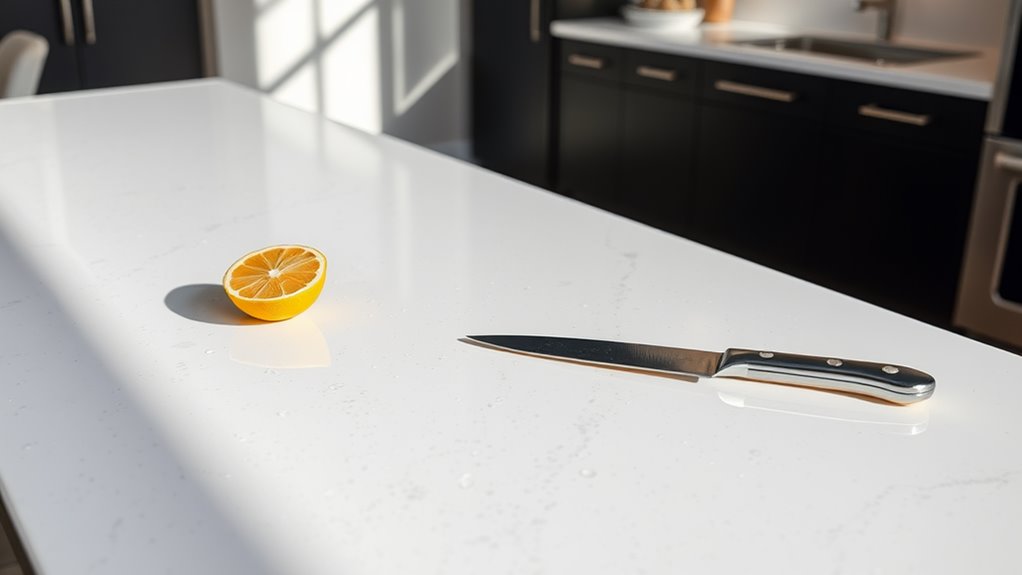
While natural stone countertops have dominated kitchens for decades, engineered quartz has emerged as today’s leading choice for modern homes. You’ll find this sophisticated material combines 93% ground natural quartz with 7% resins and pigments, creating an incredibly resilient surface that resists scratches, stains, and heat.
The quartz benefits extend beyond durability – you won’t need to seal it annually like marble or granite. Its non-porous structure prevents bacteria growth and makes cleaning effortless with just soap and water. Quartz maintenance is minimal, requiring no special cleaners or treatments to maintain its lustrous appearance.
Available in countless colors and patterns, from subtle veining to bold designs, you can achieve the exact aesthetic you’re seeking. Modern manufacturing techniques even replicate the look of natural stone while delivering superior performance.
Granite: Nature’s Time-Tested Warrior
Despite modern alternatives flooding the market, granite remains an enduring choice that’s served homeowners magnificently for generations. You’ll find this natural stone comes in hundreds of color variations, from midnight blacks to pristine whites, with unique patterns that’ll never repeat across slabs.
To maintain granite’s timeless appeal, you’ll need to follow essential granite maintenance tips: seal your counters annually, clean spills promptly, and use pH-neutral cleaners. While it’s not completely indestructible, granite resists scratches, heat, and daily wear remarkably well. You can place hot pots directly on its surface and cut vegetables without immediate damage, though using cutting boards is still recommended. For extra protection, consider enhancing your granite’s natural properties with a high-quality sealer that’ll prevent staining and preserve its lustrous finish.
Stainless Steel: Industrial-Grade Performance
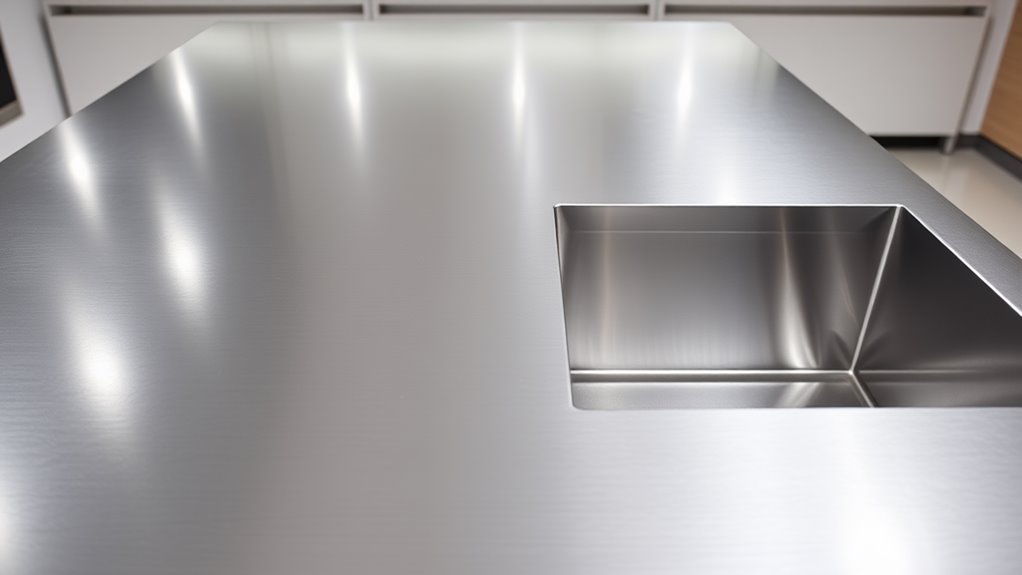
Stainless steel countertops bring professional kitchen performance into residential spaces, offering a striking departure from granite’s natural patterns. You’ll find that stainless steel maintenance is remarkably straightforward – just wipe down with mild soap and water to maintain its pristine appearance. The sleek stainless steel aesthetics create a contemporary statement that’s both timeless and industrial-chic.
- Heat-resistant properties make it ideal for serious home chefs who work with hot pots and pans
- Non-porous surface prevents bacterial growth and guarantees maximum food safety
- Seamless installation options eliminate gaps where dirt could accumulate
When you’re considering this commercial-grade material for your home, keep in mind that while it may show scratches and fingerprints more readily than other surfaces, these marks contribute to a natural patina that many designers find appealing in modern kitchen spaces.
Quartzite: The Premium Stone Powerhouse
Since natural quartzite forms under intense heat and pressure, it emerges as one of the most durable stone countertop options you’ll find. This metamorphic rock surpasses granite in hardness and resists scratches, heat, and etching from acidic substances.
You’ll uncover quartzite’s stunning color options range from pure whites and creams to dramatic blues and golds, often featuring crystalline patterns that mimic marble’s elegance. While it’s more expensive than some alternatives, quartzite’s longevity makes it a worthy investment for your modern kitchen.
Essential quartzite maintenance tips include sealing the surface annually and promptly wiping spills. You’ll want to use a pH-neutral cleaner for daily care and avoid abrasive scrubbing tools. With proper maintenance, your quartzite countertops will maintain their luxurious appearance and structural integrity for decades.
Porcelain: The Ultra-Resistant Newcomer
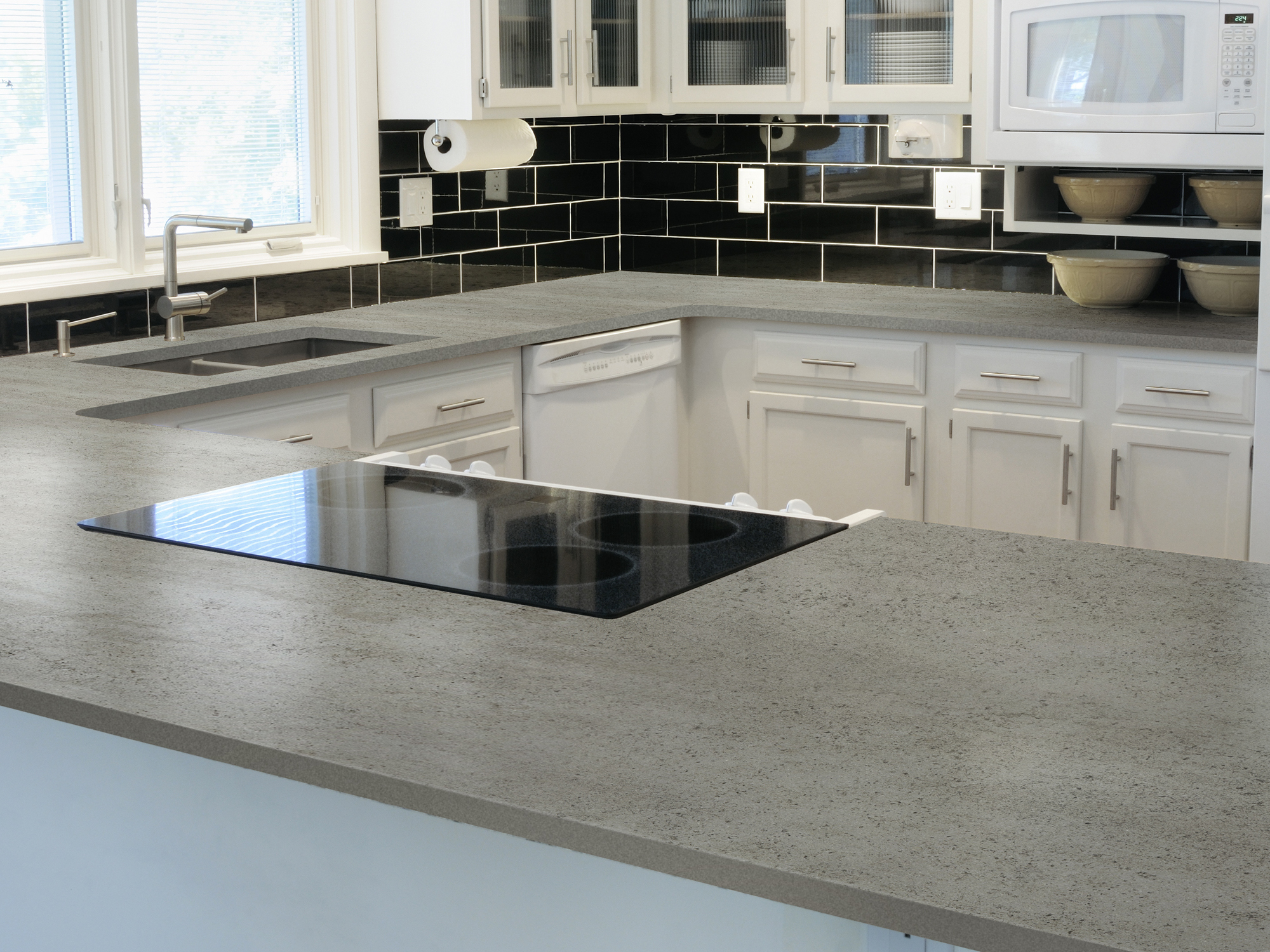
While natural stones dominate traditional countertop choices, porcelain has emerged as a cutting-edge material that’s revolutionizing modern kitchen design. You’ll find that porcelain advantages include exceptional heat resistance, scratch resistance, and near-zero porosity. It’s engineered to withstand the demands of busy kitchens while offering stunning aesthetic versatility.
- UV-resistant properties guarantee your countertop won’t fade or discolor when exposed to sunlight
- Non-porous surface prevents bacterial growth and resists staining from wine, citrus, or oils
- Available in ultra-thin profiles as slim as 6mm, creating a sleek, contemporary look
Porcelain maintenance couldn’t be simpler – you won’t need special cleaners or annual sealing. Just wipe with mild soap and water to maintain its pristine appearance. The material’s durability and low maintenance requirements make it an ideal choice for forward-thinking homeowners.
Frequently Asked Questions
Can Countertop Materials Affect Home Resale Value?
Yes, your countertop choices can greatly impact your home’s resale value. High-end materials like quartz, granite, or marble often yield better returns in the resale market because they’re both functional and luxurious. You’ll find that modern buyers scrutinize countertop aesthetics closely, as they’re considered key indicators of a home’s general quality. If you’re planning to sell, investing in premium countertops can enhance your property’s appeal and marketability.
How Often Should Different Countertop Materials Be Professionally Resealed?
For ideal material longevity, you’ll need to follow specific residential maintenance schedules for resealing. Granite requires professional resealing every 1-2 years, while marble needs it every 6 months due to its porous nature. You can stretch butcher block resealing to 3-4 years with proper care. Quartz doesn’t require resealing at all, and concrete needs it annually. Remember, high-traffic areas might need more frequent attention to maintain their protective barrier.
Which Countertop Materials Are Most Eco-Friendly and Sustainable?
You’ll find several sustainable options for your eco-conscious kitchen design. Recycled glass countertops offer stunning visual appeal while repurposing post-consumer materials into a durable surface that’s both practical and planet-friendly. Bamboo countertops provide a renewable choice, as bamboo regenerates quickly and requires minimal processing. Other green options include reclaimed wood, PaperStone (made from recycled paper), and salvaged concrete. Each material brings its own unique aesthetic while minimizing environmental impact.
Are There Health Concerns Associated With Any Popular Countertop Materials?
You’ll want to be aware of several health risks associated with certain countertop materials. Quartz can emit low levels of radon, while some granite may release trace amounts of radioactive materials. Chemical exposure is possible with laminate countertops, which might off-gas formaldehyde. Recycled glass countertops occasionally contain lead from old materials. Sealed surfaces are safer, but you should test your countertops periodically and guarantee proper ventilation in your kitchen.
What Are the Average Installation Times for Different Countertop Materials?
You’ll find installation timeframes vary considerably depending on your chosen material. Laminate countertops can be installed in 1-2 days, while granite and quartz typically take 2-3 days due to material preparation and templating requirements. Wood butcher block installation runs about 1-2 days, and concrete countertops need 3-5 days to account for pouring and curing time. Solid surface materials like Corian usually require 2-3 days for proper installation and seaming.