
You’ll find that engineered quartz leads the market in 2025, offering superior durability at $40-100 per square foot with minimal maintenance. Natural quartzite tops the premium segment at $70-200 per square foot, while granite remains competitive at $40-100. For budget-conscious projects, laminate provides decent durability at $20-40 per square foot. Each material’s cost-to-durability ratio varies considerably based on your specific needs, installation requirements, and long-term maintenance expectations.
Understanding Cost Factors in Countertop Selection
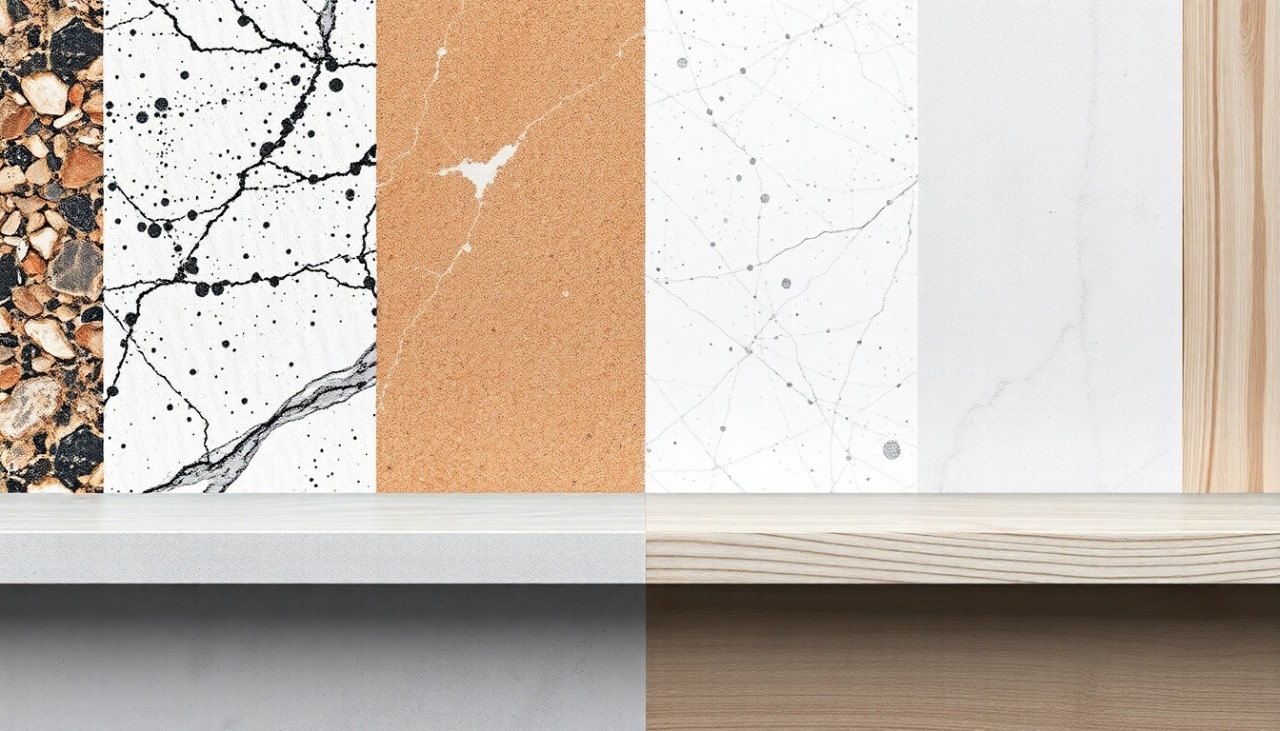
When selecting countertop materials, you’ll need to contemplate three primary cost factors: the raw material expense, fabrication complexity, and installation requirements.
Raw material costs vary greatly based on market availability and material sourcing options. You’ll find that exotic granites and premium engineered stones command higher prices than standard varieties. Fabrication complexity directly impacts countertop pricing strategies, with intricate edge profiles, cutouts, and seam placements increasing labor costs. Complex installations, especially with heavy materials like natural stone, require specialized equipment and experienced technicians.
Consider these factors alongside your budget constraints. While premium materials offer exceptional durability and aesthetics, mid-range options often provide a superior balance of performance and cost. Understanding these cost elements helps you make informed decisions that align with both your design vision and financial parameters.
Natural Stone Options: Granite, Marble, and Quartzite
When you’re evaluating natural stone countertops, granite stands out as a proven performer offering exceptional durability and competitive pricing at $40-100 per square foot installed. Marble’s distinctive veining and luminous appearance command $50-150 per square foot installed, though you’ll need to accept its vulnerability to etching and staining. Quartzite tops the price spectrum at $70-200 per square foot installed but rewards you with superior hardness and heat resistance while displaying the crystalline aesthetics of marble.
Granite’s Strength and Value
Among natural stone options, granite remains a top choice for countertops due to its exceptional durability and relatively competitive price point. You’ll find granite scoring 6-7 on the Mohs hardness scale, making it highly resistant to scratches and daily wear. At $45-125 per square foot including granite installation, it offers excellent value compared to other natural stones.
Granite aesthetics feature unique crystalline patterns and color variations that can’t be replicated in manufactured materials. You won’t need to worry about heat damage, as granite withstands temperatures up to 1,200°F. While it requires annual sealing to maintain its stain resistance, this maintenance is minimal compared to marble. For ideal durability, choose slabs at least 1.25 inches thick and guarantee professional installation with proper support underneath.
Marble’s Elegant Visual Appeal
The timeless elegance of marble countertops stems from their distinctive veining patterns and luminous crystalline structure. You’ll find classic Carrara and Calacatta marbles featuring delicate gray and gold veining against pristine white backgrounds, while Emperador varieties showcase rich brown tones with dramatic streaking.
These natural marble patterns result from metamorphic processes where limestone undergoes intense heat and pressure. Each slab displays unique marble colors and characteristics, ensuring your countertop is truly one-of-a-kind. The translucent quality of marble creates a depth that artificial materials can’t replicate, allowing light to penetrate slightly below the surface for an ethereal glow. This subtle luminosity, combined with the material’s cool touch and sophisticated appearance, explains why marble remains the leading choice for luxury kitchens and high-end bathroom vanities.
Quartzite’s Premium Market Position
Premium quartzite slabs command top-tier pricing in today’s natural stone market, often surpassing both granite and marble due to their limited availability and superior technical specifications. You’ll find quartzite characteristics that include exceptional hardness (higher than granite), heat resistance, and scratch resistance, making it ideal for demanding kitchen environments.
In quartzite applications, you’re investing in a material that withstands acidic foods, heavy cookware, and daily wear without etching or dulling. The stone’s crystalline structure, formed under intense heat and pressure, creates a dense surface that’s nearly impervious to staining when properly sealed. You’ll notice that high-end quartzite varieties, especially those with dramatic veining patterns, can cost $150-200 per square foot installed, reflecting their position as a luxury countertop choice.
Engineered Materials: Quartz and Solid Surface
You’ll find engineered materials like quartz and solid surface offering exceptional durability at $40-100 per square foot, with quartz commanding the higher end of that range due to its 93% natural stone composition mixed with polymer resins. While natural stones require periodic sealing, these engineered alternatives resist stains and scratches without ongoing maintenance beyond regular cleaning with non-abrasive products. Quartz delivers superior impact resistance and near-zero porosity compared to granite, while solid surface materials like Corian® allow for seamless installations and quick repairs of any surface damage.
Pros and Cost Breakdown
Modern engineered materials like quartz and solid surface countertops strike an ideal balance between durability and cost-effectiveness. You’ll find that these materials offer exceptional cost efficiency while maintaining superior material longevity compared to natural stone options.
- Quartz countertops range from $50-$150 per square foot installed, delivering high-end aesthetics with minimal maintenance
- Solid surface materials typically cost $35-$85 per square foot installed, offering seamless integration and easy repairs
- Both materials resist scratches, stains, and bacteria growth, reducing long-term maintenance costs
- Factory-controlled manufacturing guarantees consistent quality and color throughout each slab
These engineered solutions provide warranties ranging from 10-25 years, protecting your investment. While initial costs may exceed laminate options, their durability and low maintenance requirements result in better long-term value for your kitchen or bathroom renovation project.
Durability Vs Natural Stone
While natural stone countertops have long dominated high-end installations, engineered materials now outperform them in several key durability metrics. You’ll find that quartz and solid surface materials offer superior scratch and impact resistance compared to natural stone properties, particularly marble and limestone.
In durability comparison testing, engineered surfaces resist etching from acidic substances and don’t require periodic sealing like their natural counterparts. Quartz consistently achieves a Mohs hardness rating of 7, exceeding marble’s 3-5 rating. You won’t need to worry about the inherent fissures and inconsistencies that can compromise natural stone’s structural integrity.
While granite remains competitive in heat resistance, today’s engineered materials match or exceed most natural stone properties in stain resistance, chemical stability, and long-term wear characteristics.
Maintenance and Care Tips
Thanks to their non-porous composition, engineered quartz and solid surface countertops require minimal maintenance compared to natural stone alternatives. You’ll find daily cleaning techniques remarkably straightforward, as these materials resist bacteria and don’t need sealing.
For ideal stain prevention and longevity of your engineered surfaces:
- Wipe spills immediately with a soft cloth and mild soap solution
- Use non-abrasive cleaners specifically formulated for quartz or solid surfaces
- Protect from extreme heat by using trivets and hot pads
- Avoid harsh chemicals like bleach, paint removers, or alkaline cleaning products
While these surfaces are highly resistant to scratches and stains, you’ll want to use cutting boards and avoid dragging heavy objects across them. For stubborn marks on solid surface materials, you can buff out minor scratches using fine-grit sandpaper, though quartz shouldn’t be sanded.
Budget-Friendly Alternatives: Laminate and Butcher Block
Despite their lower price points, laminate and butcher block countertops offer compelling advantages for budget-conscious homeowners. When evaluating laminate benefits, you’ll find modern options featuring realistic patterns and textures that rival natural stone. Butcher block care involves simple oiling and occasional sanding, making it a practical choice for DIY-minded homeowners.
| Feature | Laminate | Butcher Block |
|---|---|---|
| Cost/sq ft | $20-40 | $40-100 |
| Lifespan | 10-15 years | 20+ years |
| Heat Resistance | Low | Moderate |
| Maintenance | Minimal | Regular oiling |
You’ll appreciate how laminate resists stains and requires minimal upkeep, while butcher block’s natural warmth adds character to your kitchen. Both materials can be installed by experienced DIYers, further reducing your total investment while maintaining a professional appearance.
Maintenance Requirements Across Materials
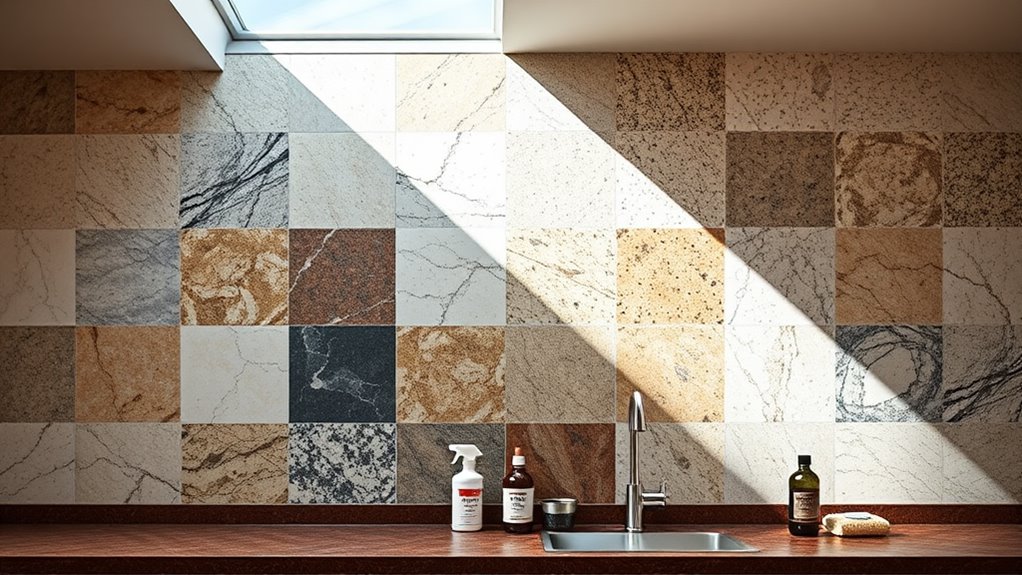
Proper maintenance directly impacts the longevity and appearance of your countertop investment. Different materials demand varying levels of care, with some requiring more rigorous cleaning techniques than others.
- Granite and marble need annual sealing to maintain stain resistance, plus daily cleaning with pH-neutral cleaners to prevent etching
- Quartz requires minimal maintenance with simple soap and water, offering superior stain resistance without sealing
- Butcher block demands regular oiling every 6 months and immediate attention to water spills to prevent warping
- Stainless steel needs frequent polishing to maintain its luster, while specialized cleaners help prevent fingerprints
You’ll find that engineered materials like quartz typically require less upkeep than natural stones, making them increasingly popular for busy households seeking low-maintenance solutions.
Durability and Longevity Comparison
When selecting a countertop material, durability and expected lifespan should guide your investment decision alongside aesthetic preferences. Industry durability testing shows that engineered quartz consistently outperforms other materials, withstanding impacts, scratches, and heat up to 20+ years. Natural granite follows closely, offering 15-20 years of resilience when properly sealed.
You’ll find that stainless steel and concrete exhibit excellent longevity expectations in commercial settings, though they’re susceptible to scratching. Marble, while luxurious, ranks lower in durability testing due to its softness and acid sensitivity. Butcher block and laminate typically last 10-15 years with proper care, but they’re more vulnerable to damage. Solid surface materials like Corian offer mid-range durability, lasting 12-20 years depending on use intensity and maintenance practices.
Environmental Impact and Sustainability
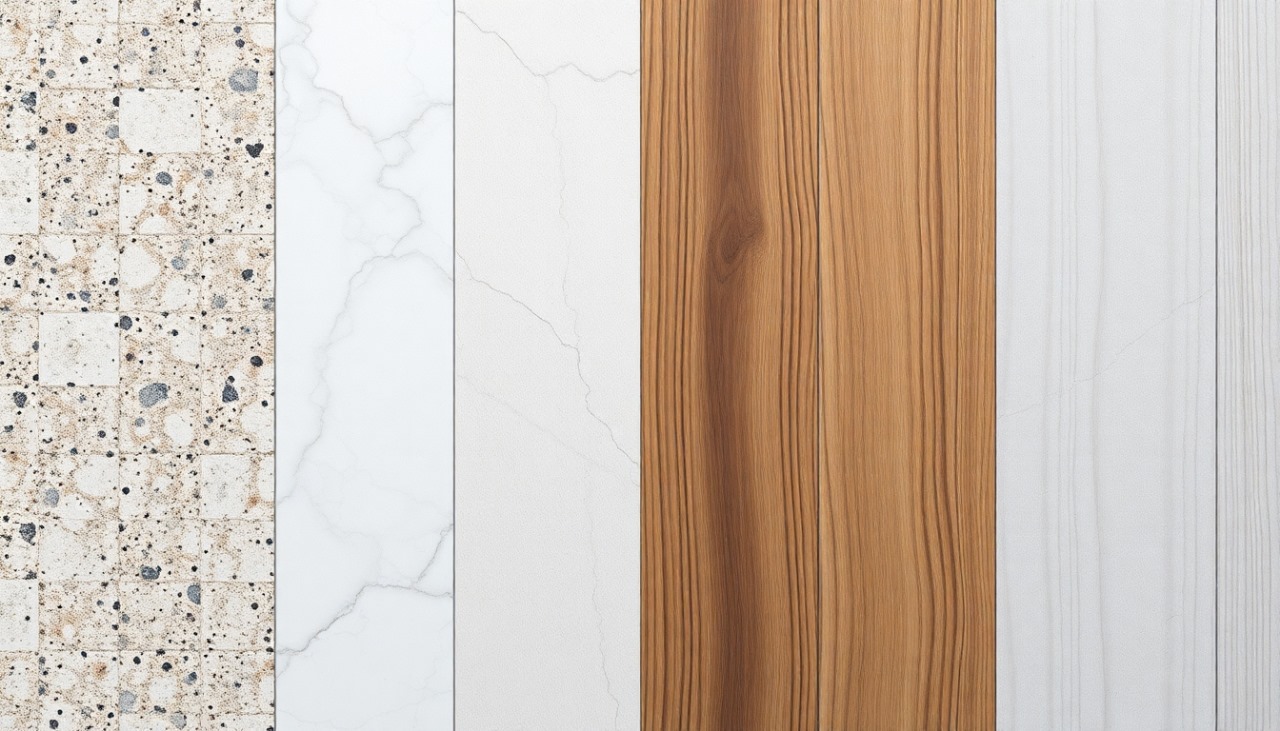
The environmental footprint of countertop materials varies considerably across their lifecycle, from extraction to disposal. When you’re selecting eco-friendly choices for your kitchen, it’s essential to take into account both production impact and long-term sustainability.
- Recycled glass countertops divert waste from landfills and require 75% less energy to produce than virgin materials.
- Bamboo surfaces offer sustainable sourcing, as the plant regenerates within 3-5 years.
- Reclaimed wood countertops repurpose existing materials, reducing deforestation impact.
- Concrete countertops can incorporate recycled aggregates and fly ash, lowering their carbon footprint.
Material certifications like GREENGUARD and FSC can guide your selection process. While natural stone requires intensive quarrying, engineered alternatives often incorporate recycled content. You’ll find that materials with lower environmental impact don’t necessarily compromise on quality or aesthetics.
Installation Considerations and Cost Breakdown
Beyond environmental factors, installation complexity and budget parameters shape your countertop material selection. Professional installation costs vary considerably: natural stone requires specialized tools and expertise, while laminate offers DIY-friendly installation techniques. You’ll need to factor in substrate preparation, seaming requirements, and edge treatment options.
A thorough cost analysis reveals that material expenses typically represent 40-60% of your total project budget. Labor costs range from $8-15 per square foot for laminate installation to $35-85 for stone materials. Further considerations include underlayment requirements, sink cutouts, and backsplash integration. Premium materials like quartzite demand expert fabrication, while modular options like butcher block allow for more flexible installation approaches. For precise budgeting, you’ll need to account for delivery fees, waste factors, and potential structural reinforcement requirements.
Frequently Asked Questions
Can I Put a Hot Pan Directly on My Countertop Material?
You shouldn’t place hot pans directly on any countertop material, regardless of its heat resistance. While materials like granite and quartz can withstand high temperatures, direct contact with hot cookware can cause thermal shock, leading to cracks or discoloration. Proper countertop care includes using trivets or hot pads to protect your surface. Even heat-resistant materials have temperature thresholds, and repeated exposure to extreme heat can compromise their integrity over time.
How Long Should I Wait Before Using a Newly Installed Countertop?
You’ll need to follow specific installation guidelines for proper countertop maintenance and longevity. Wait 24 hours after installation before placing any items on your countertop to allow adhesives and sealants to fully cure. For natural stone or concrete countertops, you should wait 48-72 hours before heavy use. Don’t expose the surface to water during this time, and avoid placing appliances or heavy objects until the recommended curing period is complete.
Do Countertop Materials Affect the Resale Value of My Home?
Yes, your countertop choices greatly impact your home’s resale value. Current countertop trends show that premium materials like quartz and natural stone can yield up to 80% return on investment during resale. When planning home renovations, you’ll find that outdated or low-quality countertops can deter potential buyers. You’re making a smart investment by selecting durable, on-trend materials that align with market preferences, particularly in high-traffic areas like kitchens and bathrooms.
What Happens if I Accidentally Drop Heavy Objects on My Countertop?
When you drop heavy objects on your countertop, the damage depends on your surface material’s impact resistance. Granite and quartz can typically withstand heavy impacts but may chip at corners. Laminate and tile are more vulnerable, often cracking or denting. For minor damage, you’ll find countertop repair options like epoxy fillers or professional resurfacing. However, severe impacts might require section replacement, especially with natural stone or engineered materials.
Can I Change the Color of My Countertop Material After Installation?
You’ve got several countertop refinishing options to change your countertop’s color post-installation. For laminate, you can apply specialty paint or refinishing kits. Natural stone countertops can be recolored using penetrating dyes or stains. For quartz, your color change techniques are limited since it’s engineered material – refinishing isn’t recommended. Solid surface materials like Corian can be professionally refinished. However, some materials won’t accept new colors well, so consult a professional before attempting any changes.