
When choosing the best kitchen sink countertop materials, you should consider durability, maintenance, and style. Granite offers unique patterns, while quartz provides exceptional durability and low upkeep. Marble emits elegance, but it needs more care against scratches. Soapstone's earthy tones blend beauty and functionality, and butcher block adds warmth but requires regular oiling. Stainless steel is practical and hygienic, perfect for busy kitchens. Other options include solid surface materials for seamless design and recycled materials like glass or paper for eco-friendly choices. Each option has its strengths, so keep exploring to find the perfect match for your kitchen.
Granite
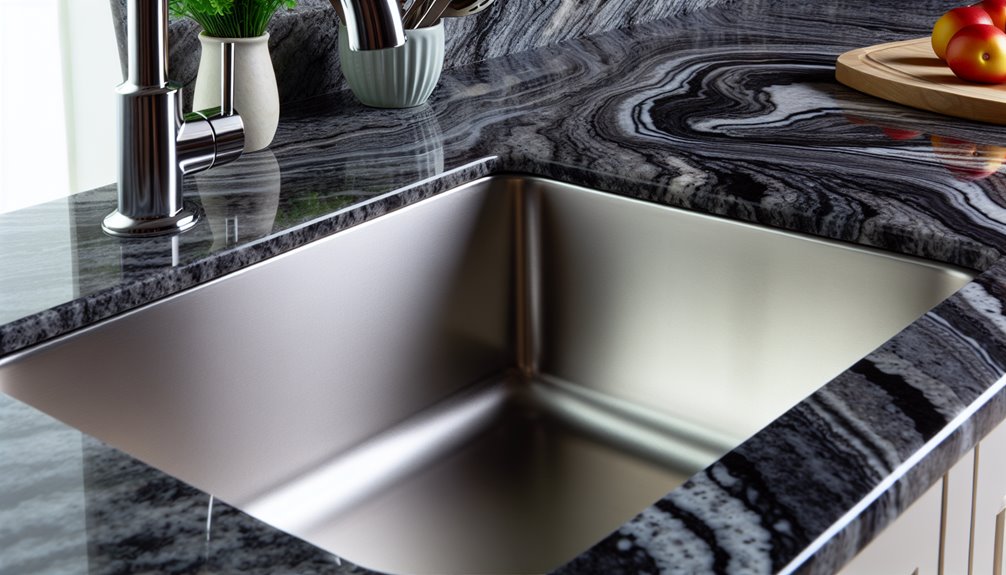
When considering kitchen sink countertop materials, granite often stands out as a top choice due to its durability and aesthetic appeal.
One of the primary granite benefits is its resistance to scratches and heat, making it ideal for busy kitchens. You won't have to worry about damaging your countertop when placing hot pots or pans on it, which can be a significant advantage in a fast-paced cooking environment.
Granite's unique patterns and colors can elevate your kitchen's overall design, providing a luxurious look that's hard to replicate with other materials. Each slab is distinct, allowing you to create a truly personalized space.
Additionally, granite installation typically involves professional help, ensuring that the heavy slabs are properly fitted and sealed to prevent moisture absorption.
While granite may come with a higher upfront cost compared to some other materials, its longevity and low maintenance requirements often make it a worthwhile investment.
With simple cleaning routines, you can keep your granite countertop looking pristine for years.
Quartz
When you consider quartz for your kitchen sink countertop, you're choosing a material that stands out for its remarkable durability and low maintenance needs.
With a wide range of aesthetic options, quartz allows you to customize your kitchen's look while enjoying the benefits of a resilient surface.
This combination makes it a compelling choice for both functionality and style.
Durability and Maintenance Ease
Quartz countertops stand out for their exceptional durability and low maintenance requirements, making them a popular choice for busy kitchens.
They're engineered from natural quartz crystals combined with resins, resulting in a non-porous surface that resists staining, scratching, and chipping. This material can greatly enhance your kitchen sink longevity since it's less likely to suffer from wear and tear compared to other surfaces.
When you choose quartz, you won't require extensive maintenance routines. A simple wipe down with soap and water is often all it takes to keep your countertop looking fresh.
Unlike granite or marble, quartz doesn't need sealing, which saves you both time and money in the long run. You can also rest easy knowing that this material is resistant to bacteria growth, promoting a healthier kitchen environment.
In terms of durability, quartz withstands high heat and impact, making it ideal for a bustling kitchen where accidents can happen.
With these advantages, it's clear that investing in quartz not just enhances functionality but also provides peace of mind in your daily kitchen activities.
You'll enjoy a beautiful, resilient surface that stands the test of time.
Aesthetic Variety Options
How do you envision your kitchen's aesthetic? With quartz countertops, you've got a wealth of aesthetic variety at your fingertips.
Quartz offers an impressive range of color palettes, allowing you to choose hues that complement or contrast with your cabinetry and flooring. Whether you're aiming for a minimalist vibe with soft whites and grays or a bold statement with deep blues or greens, quartz caters to all tastes.
Moreover, the texture contrasts available in quartz can elevate your design. You can opt for a polished finish for a sleek, modern look, or choose a honed texture for a more rustic, organic feel.
This versatility enables you to play with different materials—pairing quartz with wood cabinets for warmth or stainless steel appliances for a contemporary edge.
The beauty of quartz lies not just in its colors and textures but in its ability to harmonize with various design elements.
Marble
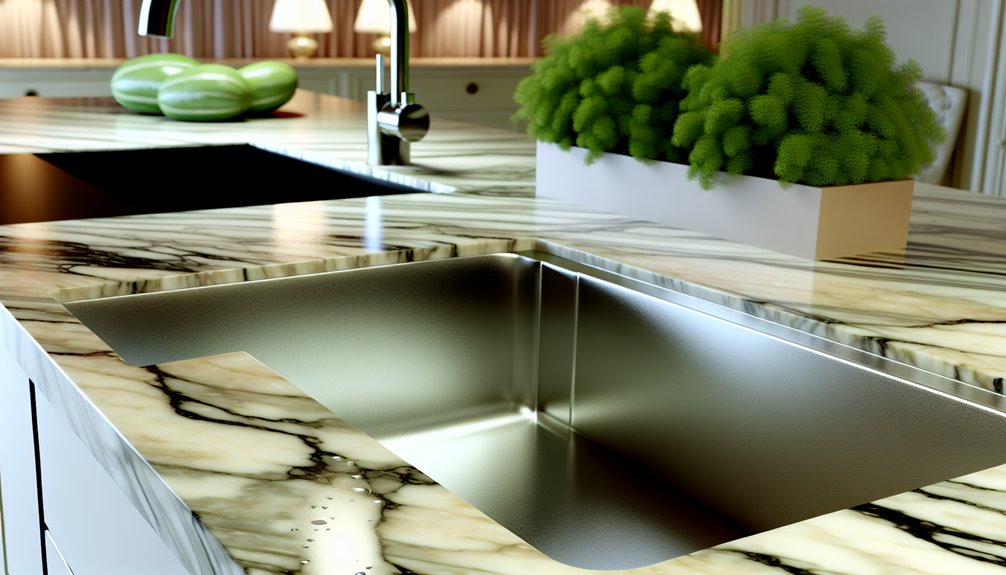
When you consider marble for your kitchen sink countertop, you're not just choosing a surface; you're opting for a statement of elegance and sophistication.
While its aesthetic appeal can elevate your space, it's essential to weigh its durability and maintenance requirements against your lifestyle.
Additionally, understanding the cost implications will help you make an informed decision that fits your budget.
Aesthetic Appeal and Elegance
Among kitchen countertop materials, marble stands out for its aesthetic appeal and elegance, transforming any space into a luxurious haven. This natural stone boasts a unique veining pattern that adds depth and character, making each slab truly one-of-a-kind. When you choose marble, you're not merely selecting a surface; you're investing in a piece of art that enhances your kitchen's overall design.
One of the most striking aspects of marble is its ability to create visual harmony. The soft, lustrous finish reflects light beautifully, making your kitchen feel more open and inviting. You can effortlessly achieve color coordination by pairing marble with various cabinetry and backsplash designs.
Whether you lean in the direction of a classic white marble with gray veins or a bold, dark variety, the options are endless.
Incorporating marble into your kitchen elevates the space and complements both modern and traditional styles, making it a versatile choice. With its exquisite aesthetic appeal, marble not just serves as a functional surface but also as a focal point that ties your kitchen's design together, creating an atmosphere of sophistication and elegance.
Durability and Maintenance Needs
While marble is renowned for its stunning aesthetic, understanding its durability and maintenance needs is essential for any homeowner.
When considering kitchen sink durability, marble presents both advantages and challenges. This natural stone boasts a beauty that few materials can rival, but it's also prone to scratches and stains. If you're using marble, be aware that it can chip or crack under heavy impact, which might be a concern in a bustling kitchen environment.
Maintenance requirements for marble are significant. You'll need to seal it regularly to help protect against moisture and food stains.
It's advisable to clean spills quickly, as acidic substances like lemon juice or vinegar can etch the surface. A gentle cleanser is your best friend here—harsh chemicals can damage the finish.
Cost Considerations and Budget
How much should you expect to spend on a marble countertop for your kitchen? Conducting a thorough cost analysis is essential for effective budget planning.
Marble countertops are often considered a luxury option, with prices varying based on the type, quality, and installation. Generally, you can anticipate spending between $50 to $150 per square foot.
Here's a breakdown to help you budget:
- Material Cost: Expect to pay between $40 and $100 per square foot for the marble itself, depending on the quality and rarity.
- Installation Fees: Installation typically adds another $10 to $30 per square foot, influenced by your location and the complexity of the job.
- Additional Expenses: Don't forget to factor in costs for sealing, maintenance products, and potential repairs, which can add up over time.
Soapstone
Soapstone has become a popular choice for kitchen countertops due to its unique blend of beauty and functionality. One of the main soapstone advantages is its natural resistance to heat and stains, making it perfect for busy kitchens.
You'll appreciate its smooth surface, which additionally feels great but also requires minimal maintenance. With its soft, earthy tones, soapstone can add a touch of elegance to your space.
However, it's crucial to reflect on some soapstone disadvantages. While it's durable, it can be prone to scratches, and you may need to apply mineral oil periodically to enhance its appearance.
Additionally, soapstone can be heavier than other materials, which might require extra support during installation.
If you value a countertop that stands up to the rigors of daily life while offering a distinctive aesthetic, soapstone could be an excellent option.
Just weigh the pros and cons carefully to determine if it aligns with your lifestyle and design preferences. Ultimately, your choice will influence not merely the look of your kitchen but also how functional it's in daily use.
Butcher Block
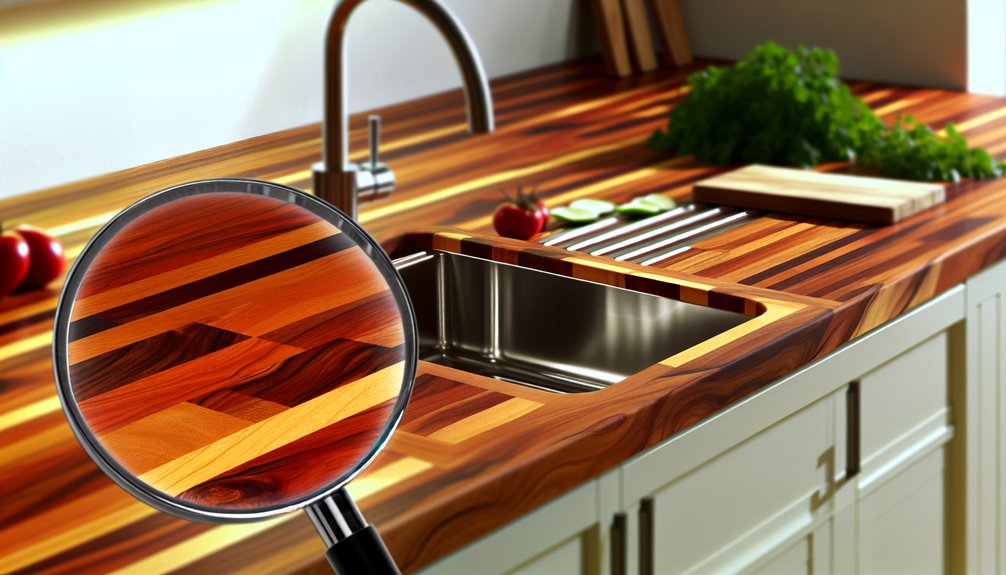
Butcher block countertops bring a natural warmth and aesthetic charm to your kitchen, making them a popular choice for many homeowners.
However, to keep them looking their best, you'll need to understand the maintenance and care tips essential for preserving their beauty.
It's important to weigh the pros and cons, as this material can greatly impact both your cooking experience and the overall vibe of your space.
Natural Warmth and Aesthetics
Embracing the natural warmth and aesthetics of butcher block countertops can transform your kitchen into a welcoming space.
With their rich wood tones and inviting presence, these surfaces not only serve a practical purpose but additionally enhance your kitchen's overall design.
The beauty lies in the unique interplay of natural textures and color variations found in each piece of wood.
Here are three key aspects that highlight the allure of butcher block countertops:
- Unique Patterns: Each slab of butcher block tells its own story through distinct grain patterns, providing a one-of-a-kind centerpiece for your kitchen.
- Warm Color Palette: The range of hues—from deep browns to lighter shades—adds depth and character to the space, allowing you to complement or contrast with cabinetry and decor.
- Versatile Design: Butcher block seamlessly fits into various design styles, whether you're aiming for rustic charm or modern elegance, making it a versatile choice for any homeowner.
Maintenance and Care Tips
Your butcher block countertop deserves the best care to maintain its beauty and functionality over time. Regular maintenance not only enhances its appearance but also prolongs its lifespan. Here are some effective cleaning techniques and stain removal tips to keep your countertop looking pristine.
| Cleaning Technique | Description |
|---|---|
| Soap and Water | Use mild dish soap and warm water to wipe down surfaces. Rinse and dry thoroughly. |
| Mineral Oil Application | Apply food-grade mineral oil monthly to prevent cracking and drying out. |
| Vinegar and Water Solution | Mix equal parts vinegar and water for a natural disinfectant that also removes odors. |
For stain removal, act quickly. Blot the stain instead of rubbing, and use a mixture of baking soda and water for tougher spots. Always test a small area first to verify there's no damage. Remember, regular oiling and proper cleaning techniques will keep your butcher block countertop in tip-top shape, guaranteeing it remains a stunning centerpiece in your kitchen for years to come.
Pros and Cons
When considering butcher block countertops, weighing the pros and cons is vital to making an informed decision. While they offer a warm, inviting look that complements various sink styles, there are some drawbacks to keep in mind.
Pros:
- Aesthetic Appeal: Butcher block adds natural beauty and warmth to your kitchen, enhancing its overall design.
- Versatility: These countertops are compatible with a range of sink styles, making them suitable for both undermount and drop-in installations.
- Repairable Surface: Scratches or dents can be sanded out, giving your countertops a fresh look without needing replacements.
Cons:
- Maintenance: Butcher block requires regular oiling to prevent drying and cracking, which can be time-consuming.
- Water Sensitivity: They're prone to water damage, so it's important to be cautious around the sink area.
- Durability Concerns: While sturdy, butcher block may not withstand heavy impacts as well as other materials, leading to potential damage over time.
Concrete
Concrete countertops have gained popularity in modern kitchens due to their unique blend of durability and aesthetic versatility. When you choose concrete, you're opting for a material that can withstand heavy use while offering an array of design possibilities.
One of the most appealing aspects is the variety of concrete finishes available. From polished to textured, you can customize your countertop to match your kitchen's style perfectly.
Moreover, concrete colors are virtually limitless. Whether you prefer a sleek, industrial gray or a vibrant hue that stands out, you can achieve the exact look you want. This adaptability allows you to create a cohesive design that reflects your personal taste.
However, it's essential to take into account the maintenance involved. While concrete is durable, it requires sealing to prevent staining and damage.
Regular upkeep will keep your countertops looking pristine.
Stainless Steel
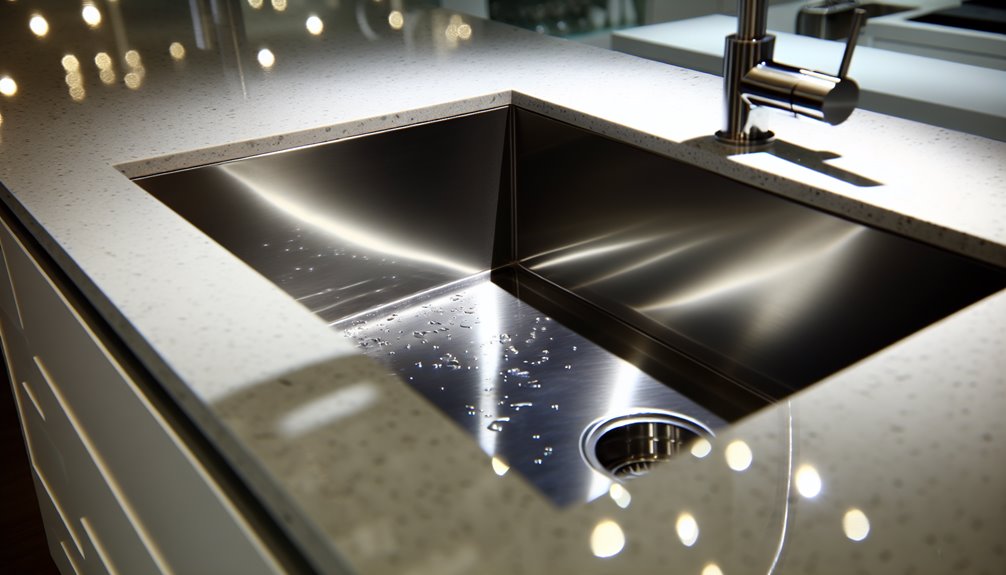
Stainless steel countertops are a popular choice among homeowners and chefs alike, thanks to their sleek appearance and outstanding functionality. If you're considering this material, you'll appreciate its numerous benefits, particularly its stainless steel durability and variety of finishes.
Here are three essential advantages of stainless steel countertops:
- Resilience: These countertops resist scratches, heat, and stains, making them ideal for heavy kitchen use. You won't have to worry about damaging your surface while cooking.
- Hygiene: Stainless steel is non-porous, meaning it won't harbor bacteria or germs. This is especially vital for food safety, giving you peace of mind as you prepare meals.
- Aesthetic Versatility: With various stainless steel finishes available—from brushed to polished—you can easily match your countertops to your kitchen decor. This adaptability allows you to create a modern or industrial look effortlessly.
Laminate
While stainless steel offers a modern aesthetic and strong performance, laminate countertops provide a different kind of appeal, combining style and affordability. When you consider laminate, you'll find a world of options that let you personalize your kitchen without breaking the bank.
Laminate materials are versatile and can mimic the look of natural stone or wood, giving you flexibility in design.
One of the standout features of laminate is its wide array of laminate colors. Whether you're after a vibrant hue or a subtle neutral, you'll easily find a color that complements your kitchen decor. This variety allows you to express your unique taste and create a space that feels truly yours.
Additionally, laminate textures can enhance the overall feel of your countertops. From sleek and smooth finishes to more textured surfaces that mimic natural materials, these options can provide depth and interest in your design.
Laminate is also incredibly easy to maintain, making it practical for busy kitchens. Overall, laminate countertops offer a stylish, budget-friendly choice that caters to diverse aesthetic preferences and functional needs.
Solid Surface
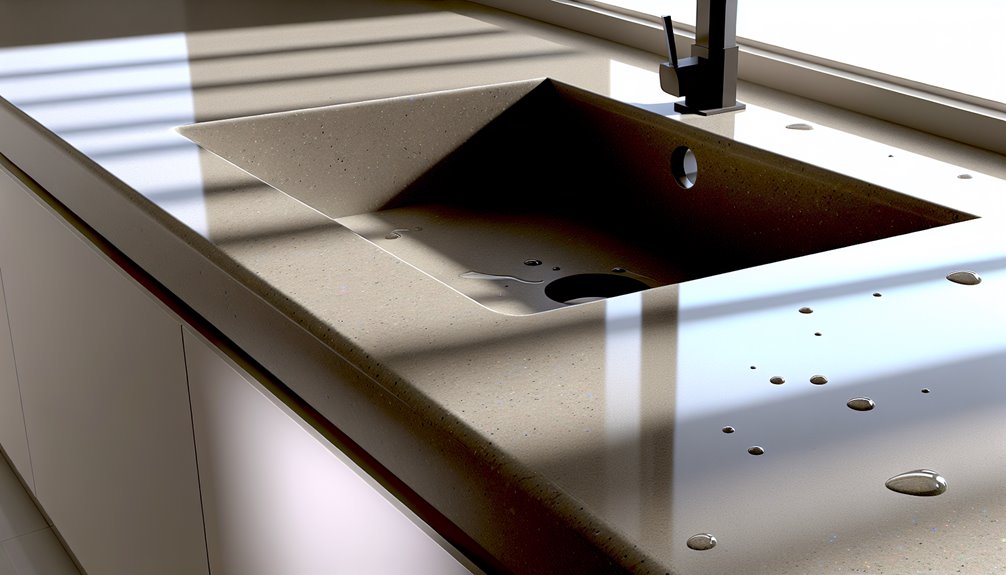
Solid surface countertops frequently stand out as a popular choice for homeowners seeking a seamless blend of aesthetics and functionality.
These surfaces offer a wide range of solid surface finishes that can elevate your kitchen's design while ensuring durability and ease of maintenance.
When considering solid surface countertops, here are three solid surface advantages to keep in mind:
- Seamless Appearance: Solid surface materials can be molded to create a continuous and smooth surface, eliminating visible seams that can trap dirt and bacteria.
- Easy Maintenance: Cleaning is a breeze with solid surfaces. They're non-porous, meaning spills won't seep in, and most stains can be easily wiped away with mild soap and water.
- Versatile Design Options: With a myriad of colors and patterns available, you can customize your countertop to fit any style, from modern to classic, ensuring it complements your kitchen perfectly.
Recycled Materials
In recent years, the use of recycled materials for kitchen countertops has gained traction among eco-conscious homeowners. These materials not only provide stunning aesthetics but also align with sustainability benefits that appeal to those looking to reduce their environmental footprint. By choosing eco-friendly options, you can create a beautiful kitchen while contributing to the planet's health.
Here's a quick comparison of some popular recycled materials:
| Material | Sustainability Benefits |
|---|---|
| Recycled Glass | Diverts waste from landfills; unique designs |
| Recycled Paper | Made from post-consumer waste; lightweight and durable |
| Reclaimed Wood | Reduces deforestation; adds warmth and character |
These countertops come in various styles and colors, ensuring you won't have to compromise on design. Whether you're drawn to the shimmering look of recycled glass or the rustic charm of reclaimed wood, you'll find options that fit your taste. By opting for recycled materials, you're not only renovating your kitchen; you're making a statement about sustainability and responsibility. So, embrace these eco-friendly options and explore your kitchen into a space that's both stylish and environmentally conscious.
Frequently Asked Questions
How Do I Clean and Maintain My Kitchen Sink Countertop?
To clean and maintain your kitchen sink countertop, you should use effective cleaning techniques like warm, soapy water and a soft cloth.
Avoid harsh chemicals that could damage the surface. For tougher stains, consider baking soda as a gentle abrasive.
Regularly wipe down the countertop to prevent buildup and maintain its shine.
Don't forget to seal natural stone surfaces periodically for protection.
Following these maintenance tips will keep your countertop looking great for years!
Which Materials Are Most Eco-Friendly for Kitchen Sinks?
Imagine a kitchen where every element whispers sustainability.
When choosing materials for your sink, consider recycled options like glass or metal. These not merely reduce waste but also add a unique touch to your space.
Bamboo is another sustainable option, offering durability and a warm, natural aesthetic.
Are There Any Heat-Resistant Countertop Options Available?
Yes, there are several heat-resistant countertop options available that enhance countertop durability.
Materials like quartz and granite can withstand high temperatures, making them ideal for busy kitchens.
If you're considering wood, look for specially treated varieties that offer some heat resistance.
Always use trivets or hot pads to protect any surface, but choosing a durable material gives you peace of mind when handling hot pots and pans.
It's a smart investment for your kitchen!
How Do I Choose a Sink That Matches My Countertop?
Imagine standing in your kitchen, the gleam of your countertop catching the light, and you pause, wondering how to choose a sink that complements it.
First, consider sink styles—undermount, farmhouse, or drop-in. Next, think about color coordination. A contrasting hue can create a striking focal point, while a similar shade promotes harmony.
Assess both materials and finishes to guarantee your sink not just fits your aesthetic but also enhances the overall kitchen design.
What Is the Average Lifespan of Different Countertop Materials?
When considering countertop durability, it's crucial to look at the average lifespan of various materials.
For instance, granite can last over 50 years, while quartz typically holds up for 25 years. Laminate might only last around 10 years, depending on care.
By making material comparisons, you can determine which option aligns best with your lifestyle and maintenance preferences.
Choosing wisely now means enjoying a beautiful, long-lasting surface in your home.
Conclusion
Choosing the right countertop material for your kitchen sink is like selecting the perfect canvas for a masterpiece. Each option—from the rugged charm of butcher block to the sleek sophistication of quartz—offers its own unique allure. Consider how each surface complements your culinary adventures and aesthetic vision. With thoughtful selection, your kitchen can become a harmonious blend of beauty and functionality, where every meal prepared feels like a celebration, and every gathering becomes a cherished memory.