
The ideal kitchen countertop height is essential for your comfort and efficiency. Generally, a height of 36 inches works best for most cooking tasks, allowing you to chop and prepare ingredients without strain. However, if you often bake, a lower countertop between 30 to 32 inches might give you better leverage. Customizing your height based on your stature enhances your cooking experience, with taller folks preferring a higher surface. Remember to include factors like material thickness and kitchen design, as they affect the overall aesthetics and functionality. Explore more to uncover how to optimize your kitchen for peak comfort and style.
Importance of Countertop Height
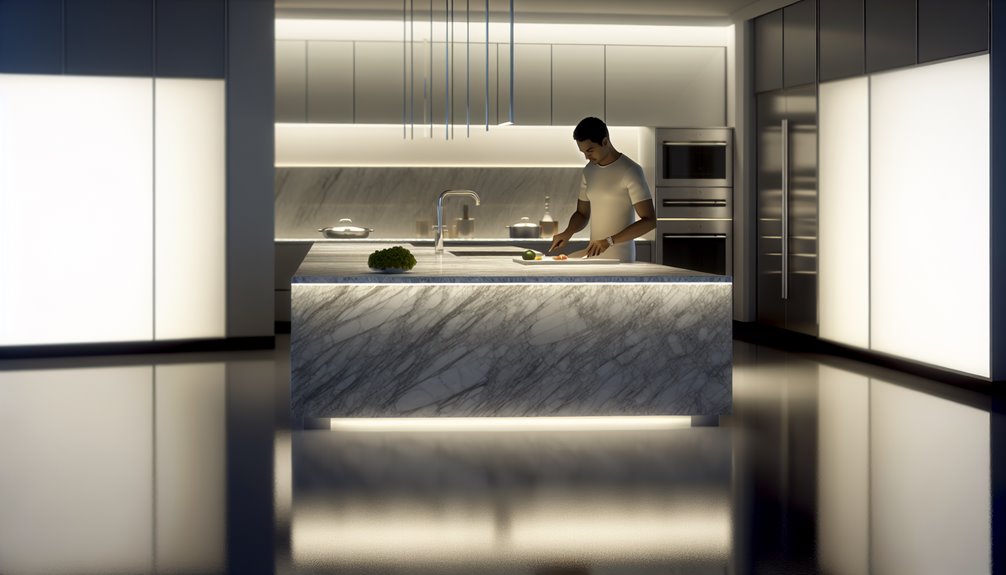
When you step into your kitchen, the countertop height greets you, shaping your entire cooking experience. It's not just a functional element; it's a critical aspect that influences your comfort and efficiency.
Picture yourself chopping vegetables or kneading dough. If the height doesn't suit you, those tasks can quickly become a strain instead of a joy.
Countertop materials play a significant role in this equation. Whether you're working with granite, quartz, or butcher block, the tactile experience varies, but the height remains essential.
You'll find height variations across different kitchen designs, and knowing your ideal height helps you choose the right setup. For instance, a lower countertop can make tasks feel more manageable, while a higher one can offer a commanding view of your culinary kingdom.
Moreover, these variations can accommodate your specific needs, whether you're prepping meals or hosting gatherings.
Emphasizing the perfect height guarantees that your kitchen becomes a sanctuary for creativity rather than a source of frustration.
Standard Countertop Heights
Across various kitchen designs, standard countertop heights typically range from 36 to 38 inches. This range has evolved to accommodate common kitchen dimensions and the average user's comfort, ensuring that meal preparation and cooking become enjoyable tasks rather than strenuous ones.
When you consider these height variations, think about how they affect your daily experiences in the kitchen. A standard height of 36 inches suits most people, facilitating a natural ergonomic posture when chopping, mixing, or kneading. If you're taller or shorter, you might find that the standard height doesn't cater to your unique needs—height variations can greatly influence how comfortable you feel while working at your countertop.
Additionally, some kitchen designs incorporate raised or lowered surfaces for specific purposes, creating a dynamic visual appeal and functional advantage. For instance, a raised bar area can serve as a casual dining spot, while a lower prep area may be ideal for kids or individuals who prefer a more accessible workspace.
Understanding these standard countertop heights and their implications can help you create a kitchen that not just looks stunning but also functions seamlessly for everyone in your household.
Task-Specific Height Recommendations
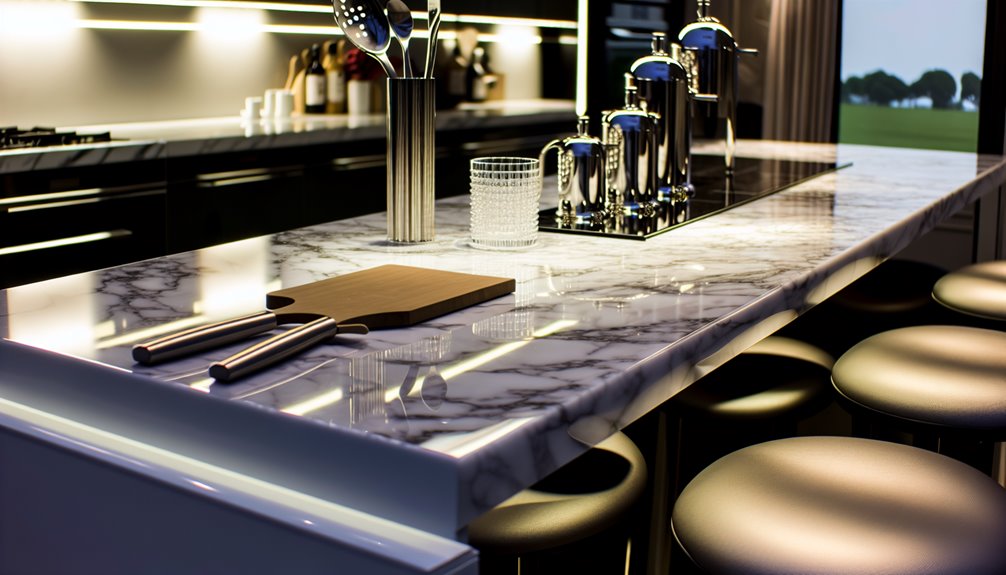
Selecting the ideal countertop height for specific tasks can greatly enhance your cooking and baking experiences. When setting up your prep station, consider that a height of 36 inches is generally best for chopping and assembling ingredients. This height allows you to maintain a comfortable posture, reducing strain during those extended meal prep sessions.
For baking tasks, however, you might find a slightly different height works best. A countertop around 30 to 32 inches can be more suitable, especially when rolling out dough or kneading bread. This lower height provides better leverage and control, making it easier to apply the right amount of pressure without overexerting yourself.
If you frequently switch between tasks, you might even consider adjustable countertops that can cater to both heights. For example, a multi-level countertop can serve your needs, allowing you to switch from a prep station to a baking area seamlessly.
Ultimately, tailoring your countertop height to specific tasks enhances your efficiency and elevates your overall kitchen experience, making every chop and fold feel effortless.
Factors Influencing Countertop Height
Countertop height isn't merely a matter of preference; several key factors play an essential role in determining what works best for you.
First, consider your kitchen layout. An open space may allow for a more versatile countertop height, while a compact kitchen might necessitate a standard height to optimize functionality. Your layout impacts both the aesthetic flow and the practicality of your workspace.
Next, think about the countertop materials you plan to use. Different materials have varying thicknesses and weights, which can influence how high or low your counters should be. For instance, a heavy stone countertop may require additional support, potentially altering its height in relation to your cabinets.
Lastly, your personal comfort matters. If you spend long hours cooking or preparing food, ensuring your countertop height aligns with your natural stance can greatly enhance your experience.
Customizing for Your Needs
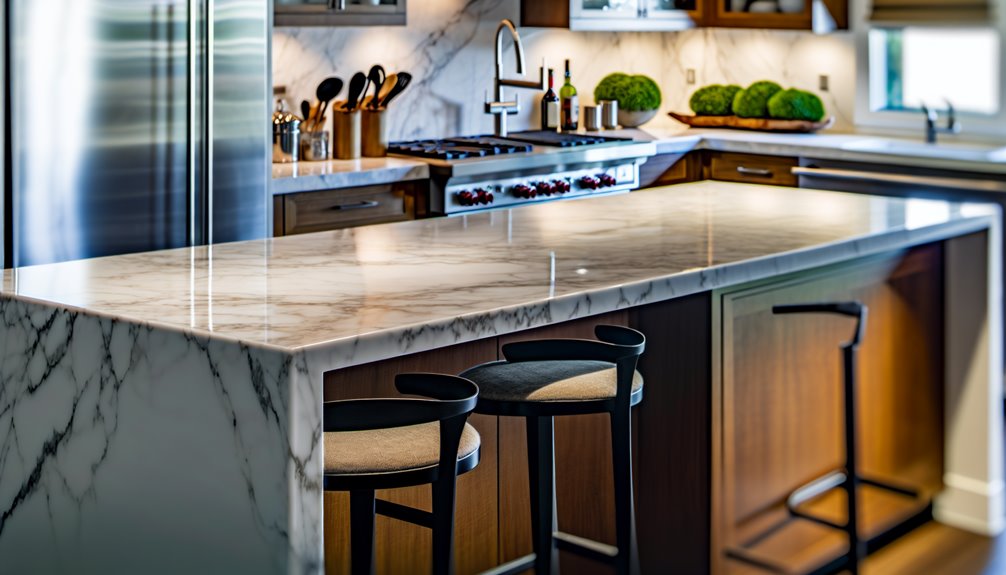
When planning your kitchen, you'll often find that customizing your countertop height can greatly enhance your overall cooking experience. Your kitchen is a reflection of your cooking style, and a well-thought-out countertop height can make all the difference.
By considering your personal preferences, you can create custom designs that cater specifically to your needs. If you're tall, for instance, a higher countertop might save you from bending over, while shorter individuals may prefer a lower surface for easy access and comfort.
Additionally, if you enjoy baking, a countertop at a specific height can facilitate better posture and efficiency while rolling out dough.
Don't forget about incorporating different heights for various tasks. A designated prep area might need to be lower, while a bar or seating area could benefit from a slightly elevated surface.
Ultimately, customizing your countertop height isn't just about aesthetics; it's about creating a functional space that feels good to work in.
Ergonomics and Comfort Tips
Regarding your kitchen countertop, finding the right height is essential for both comfort and efficiency.
You'll want to take into account ideal height guidelines while also adjusting for your individual needs, ensuring that every task feels natural and effortless.
Additionally, examining your work surface will help you create an inviting space that enhances your culinary experience.
Optimal Height Guidelines
Finding the perfect kitchen countertop height can change your cooking experience from a chore into a joy. When considering the ideal height, think about your kitchen layout and how it complements your workflow. Ideally, your countertops should allow you to prepare meals comfortably without straining your back or arms.
Most experts suggest a height of 36 inches for standard countertops, which works well for the average person. However, if you're taller or shorter, you might want to adjust accordingly.
Pay attention to the countertop materials, too; heavier stones like granite may require additional support at different heights, while lighter materials might allow for more flexibility.
When designing your kitchen, consider how each element interacts. If you have an island, its height should align with your primary countertops, ensuring a seamless shift while cooking.
Additionally, if you often bake or do intricate food prep, a slightly lower countertop might be more suitable for those detailed tasks.
Adjusting for Individual Needs
The right countertop height can greatly enhance your comfort and efficiency in the kitchen. When considering height adjustments, it's essential to recognize your personal preferences and how they relate to your cooking style. If you're taller, you might prefer a slightly higher countertop to avoid straining your back. Conversely, if you're shorter, lower countertops can make meal prep feel more natural and less cumbersome.
To find your ideal height, consider using a measuring tape to assess the height that feels most comfortable for you while standing and working. You might want to test out different heights by placing temporary surfaces or using adjustable tables to see what feels best. Remember, your kitchen is a personal space, and every inch can impact your experience.
Additionally, think about the types of tasks you frequently perform. Whether you're chopping vegetables or rolling dough, ensuring your countertop aligns with your natural posture is key.
Don't shy away from customizing your kitchen to fit your needs; this can transform your cooking experience from a chore into a joyful activity. By acknowledging your specific requirements, you'll create an ergonomic environment that enhances both comfort and functionality.
Work Surface Considerations
Creating an ergonomic workspace in your kitchen goes beyond just selecting the right height for your countertops; it involves considering the overall design and materials that contribute to comfort during food preparation.
When you're engaged in kitchen workflows, the surface materials you choose play a significant role. Opt for materials like quartz or granite, which not only provide durability but also offer a pleasant tactile experience.
Consider the texture and temperature of these surfaces. A warm, smooth countertop feels inviting and may enhance your cooking experience, while a cold, hard surface can be harsh during long prep sessions.
You should also think about the layout of your kitchen. Ensuring that your work surfaces are close to your appliances minimizes unnecessary movement, streamlining your workflow. This arrangement can help prevent fatigue, allowing you to focus on your culinary tasks without the strain.
Lastly, don't underestimate the value of adequate lighting over your work surfaces. Good lighting can reduce eye strain and create a more enjoyable workspace, making those food prep moments not just efficient but also enjoyable.
Balancing Style and Functionality
Balancing style and functionality in your kitchen countertop height can transform both the aesthetic appeal and the practicality of your space. When considering your kitchen design, think about how the height of your countertops interacts with your overall layout and style. A well-chosen height not just complements your cabinetry and appliances but also enhances the flow of your kitchen.
Imagine a sleek, modern countertop that invites you to gather around for meals or culinary adventures. If your countertops are too high, you might find yourself straining to chop vegetables or reach for ingredients. Conversely, too low can lead to discomfort, especially during extended cooking sessions. Aim for a height that feels natural for your everyday tasks.
Incorporate materials and colors that resonate with your personal style while ensuring that they're practical for daily use. A beautiful granite or quartz surface can elevate your kitchen's aesthetic appeal and withstand the rigors of cooking.
In the end, achieving the perfect balance between style and functionality in your countertop height will create a harmonious space where beauty meets usability, making your kitchen a true centerpiece of your home.
Frequently Asked Questions
What Materials Affect the Perceived Height of a Countertop?
When you think about countertop height, consider how materials can influence your perception.
Dense materials like granite have a substantial visual weight, making them feel more imposing. In contrast, lighter materials such as quartz or laminate can create an airy, open vibe, tricking your eyes into perceiving them as lower.
The interplay of material density and visual weight can considerably affect how you experience your kitchen space and its functional aspects.
How Can I Measure My Ideal Countertop Height?
So, you think measuring your ideal countertop height is as simple as grabbing a tape measure? Well, not quite!
Start by considering your own ergonomic measurements. Stand up straight and let your elbows fall at your sides; the height of your forearms while relaxed is a great starting point for countertop measurements.
Then, think about how you use your kitchen—baking, chopping, or mixing? Tailoring to your unique needs guarantees comfort and functionality.
Are There Countertop Height Standards for Children?
Yes, there are countertop height standards for children, focusing on kid-friendly designs.
These surfaces typically range from 24 to 30 inches high, allowing kids to engage comfortably in activities like cooking or crafts.
Adjustable surfaces are a fantastic option too, as they can grow with your child.
This flexibility not only enhances usability but likewise promotes independence, making your kitchen a welcoming space for all ages, fostering creativity and learning.
How Do Different Kitchen Layouts Influence Countertop Height?
Imagine gliding through an L-shaped kitchen, where the countertop beckons at just the right height for your culinary creations.
In a U-shaped kitchen, the flow of movement shapes your workspace, allowing for a seamless experience as you chop and stir.
Each layout influences the countertop height, customized to your activities.
L-shaped designs often favor shorter heights for intimate cooking, while U-shaped kitchens may elevate the surface for versatility and ease, enhancing your culinary journey.
What Tools Are Best for Adjusting Countertop Height?
When adjusting countertop height, you'll find adjustable risers and countertop jacks to be your best tools.
Adjustable risers allow for seamless height changes, accommodating various preferences and needs. Countertop jacks provide sturdy support during adjustments, ensuring stability and safety.
As you manipulate these tools, consider the aesthetics of your kitchen—maintaining a cohesive look while achieving functionality.
These tools make it easier to create a space that's both practical and visually appealing.
Conclusion
So, as you ponder the perfect countertop height, remember that while standard heights exist, your comfort reigns supreme. After all, who wants to chop veggies at an awkward angle, only to end up in a yoga class for your back? Embrace customization like it's the latest kitchen trend—because nothing screams "culinary genius" like a countertop customized to your unique stature. Balance style and function, and you'll be the envy of all your friends, or at least the ones who don't know about your height struggles.