
The standard kitchen countertop depth is 24 inches, intended to improve your cooking efficiency and comfort. This depth aligns perfectly with typical cabinetry, allowing smooth workflow and easy access to your appliances. If you prefer a more spacious feel or have specific meal prep needs, you might consider custom depths ranging from 26 to 30 inches. Kitchen islands usually measure 36 inches deep, perfect for dining and socializing. Remember, the right depth can greatly reduce strain during food preparation, enhancing your overall kitchen experience. Discovering ideal dimensions for your needs could transform your cooking space considerably.
Standard Countertop Depth Measurements
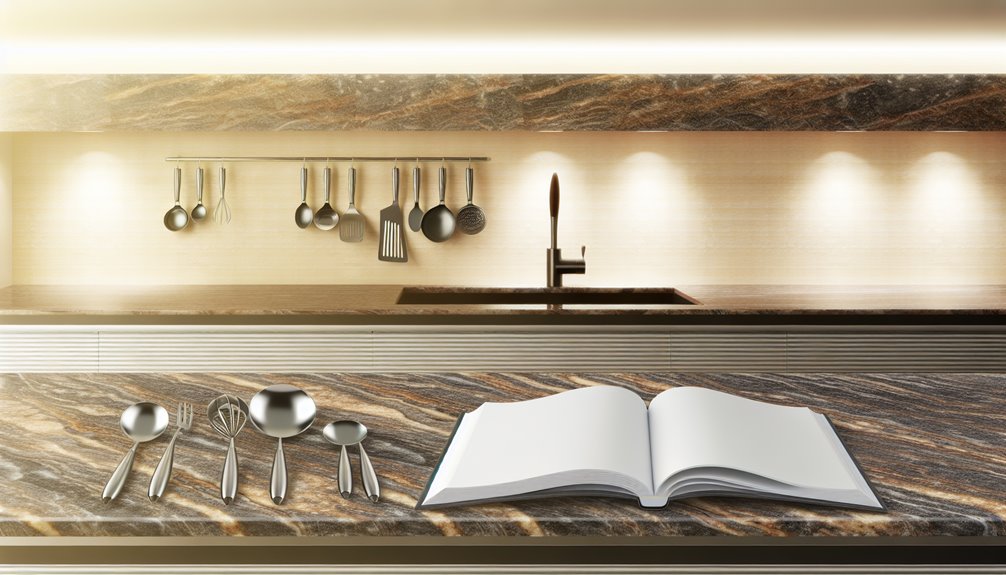
In regards to designing your kitchen, understanding standard countertop depth measurements is crucial for both functionality and aesthetics. Typically, most countertops measure 24 inches deep, which aligns with standard kitchen cabinetry. This depth allows ample working space while maintaining a streamlined look.
However, you'll find that countertop depth trends vary, especially with the rise of custom designs. Some homeowners opt for deeper surfaces, around 26 to 30 inches, to accommodate larger appliances or to create a more expansive workspace.
You should also consider standard depth variations based on the type of countertop material. For instance, quartz and granite can often support thinner profiles, while laminate may require more substantial support.
If you're working with an island, a depth of 36 inches can create an inviting area for dining or socializing.
Don't forget about the height of your appliances and the overall layout of your kitchen when choosing your countertop depth. Balancing these aspects guarantees your kitchen's design remains both practical and visually appealing, ultimately enhancing your culinary experience.
Importance of Countertop Depth
Countertop depth isn't just a number; it directly impacts your kitchen's functionality and efficiency.
When you choose the right depth, you're enhancing both the aesthetic appeal and ergonomic comfort of your workspace.
Understanding these aspects guarantees your kitchen isn't just beautiful but also customized to your needs.
Functionality and Efficiency
A countertop depth of 24 inches is generally regarded as ideal for both functionality and efficiency in the kitchen. This depth strikes a balance between providing ample workspace and maintaining a fluid kitchen workflow. With 24 inches, you can comfortably prepare meals, chop vegetables, and assemble dishes without feeling cramped.
Space utilization becomes essential as you design your kitchen. A deeper countertop allows for larger appliances, like mixers or food processors, to be easily accessible without encroaching on your prep area. Plus, it offers enough room for multitasking; you can spread ingredients out while keeping utensils and tools within reach.
Moreover, a well-planned countertop depth minimizes the need to bend or stretch excessively, reducing strain during food preparation. You'll appreciate how this depth enhances your efficiency, allowing you to move seamlessly between tasks.
Whether you're rolling dough or mixing ingredients, you'll find that a 24-inch depth supports your efforts while optimizing your workspace. Ultimately, selecting the right countertop depth isn't just about aesthetics; it's about creating a functional environment that enhances your cooking experience.
Aesthetic Appeal
Choosing the right depth for your kitchen countertop greatly impacts the overall aesthetic appeal of the space. A countertop that's too shallow may disrupt visual balance, while one that's excessively deep can overpower your kitchen's design. You want to create harmony between your countertops and other elements, including cabinets and appliances.
Consider how your countertop depth interacts with your chosen color schemes. A deeper countertop can create a striking contrast with lighter cabinetry, drawing the eye and enhancing the overall design. Conversely, if you prefer a more subtle look, a shallower depth can seamlessly integrate into a monochromatic palette, ensuring a clean, cohesive appearance.
Surface textures also play an essential role in aesthetics. A smooth, deep countertop made from polished granite can exude luxury and sophistication, while a textured, shallower surface like butcher block can evoke warmth and friendliness.
Ergonomic Considerations
Selecting the right countertop depth not just enhances your kitchen's aesthetics but also plays a substantial role in your comfort and efficiency while working in the space. The ergonomic height of your countertop should align with your stature and the tasks you perform most often. A standard depth of 24 inches allows for ideal reach and reduces strain on your back and arms.
When you stand in front of your countertop, your elbows should ideally be at a 90-degree angle. This positioning promotes user comfort, preventing fatigue during meal prep or cleanup. If the countertop is too deep, you may find yourself leaning forward, which can lead to discomfort over time. Conversely, a shallower countertop mightn't accommodate larger appliances or cooking tasks effectively.
Think about your daily activities—chopping, mixing, or rolling dough. The right depth facilitates these actions without compromising your posture. By prioritizing ergonomic considerations, you'll create a workspace that feels intuitive and natural.
Ultimately, investing time in selecting the right countertop depth can greatly enhance your kitchen experience, leading to a more enjoyable cooking environment.
Factors Affecting Countertop Depth
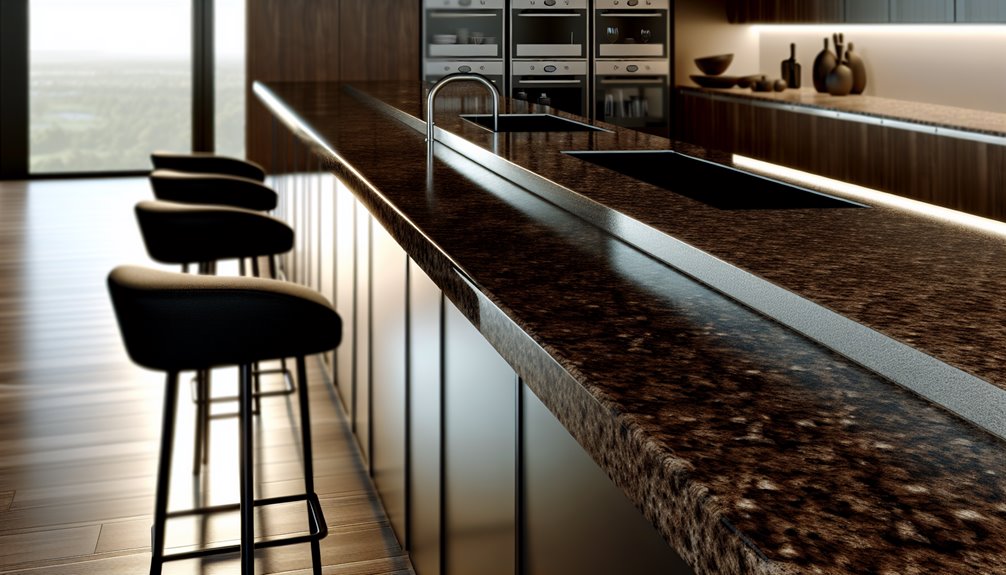
When planning your kitchen, the layout design and appliance sizes play an important role in determining countertop depth.
You'll want to make certain your counters accommodate not just your workflow but also the dimensions of your appliances for maximum functionality.
Balancing these factors is vital for creating a harmonious and efficient kitchen space.
Kitchen Layout Design
In the domain of kitchen layout design, multiple factors influence the depth of your countertops, ensuring functionality and aesthetic appeal.
First, consider your kitchen workflow. A well-planned layout promotes efficient movement between cooking, prep, and cleaning areas. If you're frequently shifting between tasks, a deeper countertop can provide additional space for ingredients, tools, or appliances, enhancing your efficiency.
Next, think about your storage solutions. The depth of your countertops should align with cabinetry and shelving systems. If you're incorporating deep drawers or pull-out shelves, a greater countertop depth can help create a seamless connection between the surfaces, allowing easy access to stored items without sacrificing workspace.
Additionally, your personal preferences play an essential role. If you enjoy cooking or baking, you might appreciate more depth for rolling dough or laying out multiple ingredients. Conversely, if your kitchen is primarily for light meal prep, standard depths may suffice.
Ultimately, balancing these factors will help you determine the ideal countertop depth, ensuring your kitchen is both functional and visually appealing.
Appliance Size Considerations
Taking into account the variety of kitchen appliances available, their sizes considerably influence your countertop depth.
When planning your kitchen, you need to guarantee all appliances fit seamlessly, promoting appliance compatibility and enhancing kitchen workflow.
Here are three key factors to bear in mind:
- Refrigerators: Depending on the model, some refrigerators can protrude or require additional clearance. Selecting a countertop depth that accommodates these variations is vital.
- Ovens and Ranges: Wall ovens and ranges have specific dimensions, often affecting where you place your countertop. Confirm the depth allows for comfortable access without compromising space for other appliances.
- Dishwashers: Standard dishwashers typically require a countertop depth that matches their front panel. This alignment prevents any awkward gaps that could disrupt your kitchen's flow.
Common Countertop Materials
While you explore options for your kitchen countertop, understanding the various materials available is essential to making an informed choice. Two popular options you'll encounter are granite countertops and quartz surfaces, each offering unique benefits.
Granite countertops are prized for their natural beauty and durability. They're available in a wide range of colors and patterns, allowing you to choose a design that complements your kitchen's aesthetic. The stone is heat and scratch-resistant, making it an ideal choice for a busy kitchen.
However, granite requires periodic sealing to maintain its appearance and prevent staining.
On the other hand, quartz surfaces, an engineered material, combine natural quartz crystals with resins and pigments. This process results in a non-porous countertop that resists stains and bacteria, making it easy to clean and maintain.
Quartz surfaces also offer a uniform appearance, which can be appealing if you prefer a modern look.
Ultimately, your choice between granite and quartz will depend on your lifestyle, design preferences, and maintenance willingness. Take the time to weigh these factors, ensuring your selection enhances both functionality and style in your kitchen.
Customizing Countertop Depth
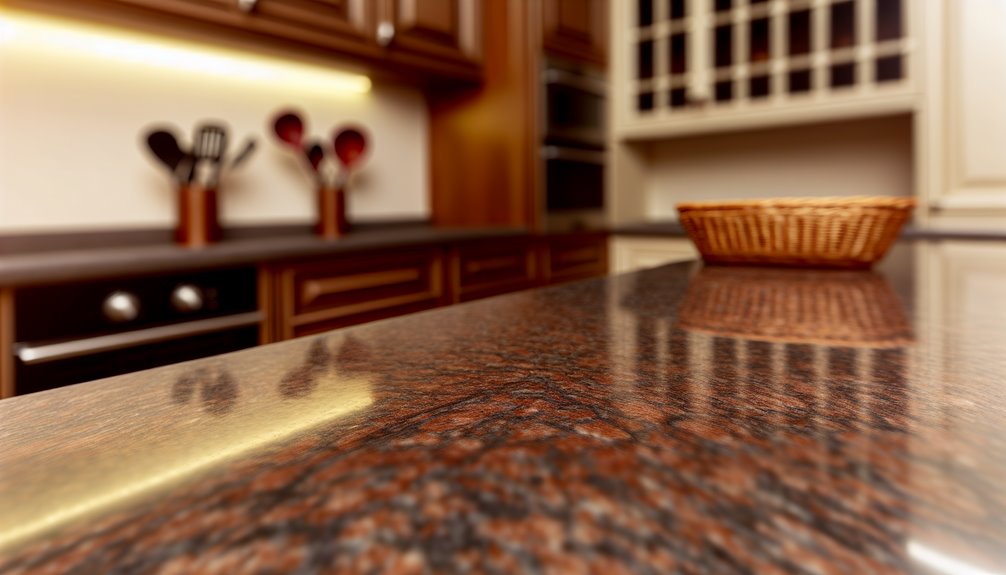
When selecting materials for your kitchen, it's just as important to think about the depth of your countertop as it's to choose the right surface.
Depth customization can greatly affect your kitchen's functionality and aesthetic appeal. Here are three key considerations when customizing your countertop depth:
- Work Surface Needs: Consider how you use your kitchen. If you often prepare large meals or work with multiple appliances, a deeper countertop may provide you with the extra space you need.
- Appliance Compatibility: Confirm that your countertop depth aligns with your appliances. A deeper surface might interfere with the placement of certain devices, leading to a cramped kitchen layout.
- Ergonomics: Think about your height and comfort. Customizing the countertop depth can help you achieve a more comfortable working position, reducing strain during meal prep.
Depth and Kitchen Layout
The depth of your kitchen countertop plays an essential role in shaping the overall layout and flow of the space. It influences how you organize your countertop and can greatly impact your kitchen workflow. A standard depth of 24 inches offers ample room for appliances, food prep, and decorative elements, but if you have specific needs, you might contemplate adjusting that depth.
When choosing the right depth, think about how you move around the kitchen. A deeper countertop can provide more surface area for multitasking, allowing you to keep your workspace organized. However, if it's too deep, it might force you to reach further than you'd like, disrupting your efficiency.
Moreover, the layout of your cabinets and appliances impacts how well the countertop integrates with the overall design. Make sure to consider proximity to your stovetop, sink, and refrigerator.
The right depth can enhance your kitchen's aesthetics while improving functionality. In the end, you want a kitchen that not only looks great but also supports your daily tasks, making countertop organization a seamless part of your kitchen workflow.
Tips for Choosing Depth
Choosing the right countertop depth involves evaluating both your cooking habits and kitchen layout. When you consider how you use your kitchen, you'll find the perfect depth that enhances efficiency and comfort. Here are some tips to guide your decision:
- Assess Your Cooking Style: If you enjoy meal prepping or baking, a deeper countertop allows for more space to spread out ingredients and countertop accessories. This additional area can make a significant difference during busy cooking sessions.
- Consider Your Height: Your height plays a vital role in countertop depth. A depth of 24 inches is standard, but if you're taller or shorter, you might want to adjust this for ideal ergonomics. You should feel comfortable and natural while working in your kitchen.
- Maximize Space Utilization: Think about your kitchen's overall layout. If you have limited space, a shallower countertop may be beneficial, allowing for easier movement around the kitchen and better access to appliances.
Frequently Asked Questions
What Tools Are Needed to Measure Countertop Depth Accurately?
To measure countertop depth accurately, you'll need a few essential tools.
Start with a tape measure for precise depth measurement, ensuring it's marked in both inches and centimeters. A straightedge or level can help maintain a straight line for measuring techniques.
Use a pencil to mark measurements on the wall or cabinets. Having a notepad handy to jot down your findings will keep everything organized and prevent confusion during your project.
Can I Install a Countertop Myself, or Should I Hire a Professional?
You can tackle DIY countertop installation, but consider the advantages of professional installation first.
While you might enjoy the satisfaction of a hands-on project, hiring a pro guarantees precision and expertise. They'll navigate intricacies like plumbing and electrical adjustments seamlessly, saving you time and potential headaches.
If you're confident in your skills and tools, go for it! But if not, investing in a professional might be the smarter choice for lasting results.
How Much Overhang Should I Allow for My Countertop?
When considering how much overhang to allow for your countertop, aim for about 1 to 1.5 inches for ideal countertop aesthetics.
If you're incorporating dining functionality, a 12-inch overhang is perfect for seating, ensuring comfort and practicality.
This balance not just enhances the visual appeal of your kitchen but also allows guests to sit comfortably without feeling cramped.
What Are the Best Practices for Maintaining Countertop Depth Over Time?
While a beautiful countertop can elevate your kitchen, neglecting its maintenance can lead to disaster.
To maintain countertop depth over time, regularly clean your surfaces based on the specific countertop materials you've chosen. Use gentle cleaners, avoiding harsh chemicals that could wear them down.
Seal natural stone surfaces every year, and always check for chips or cracks.
Following these maintenance tips guarantees your countertops remain functional and stunning, enhancing your kitchen's longevity.
Are There Building Codes Related to Kitchen Countertop Depth?
Yes, there are building regulations regarding kitchen countertop depth that you should be aware of.
These regulations often outline countertop standards to guarantee safety and functionality. Typically, the standard depth falls within a range that accommodates various appliances and user needs.
By adhering to these codes, you not just comply with legal requirements but also enhance the usability of your kitchen.
Always check local guidelines to guarantee your design meets necessary standards.
Conclusion
As you stand in your kitchen, envision the perfect countertop depth—one that harmonizes with your space and enhances your cooking experience. Remember, the right depth isn't just about measurements; it's about creating a canvas for your culinary masterpieces. Consider your layout, materials, and personal style. With thoughtful choices, you can transform your kitchen into a functional and inviting haven, where every meal becomes a delightful journey, crafted on a surface that truly feels like home.