
To safely remove your countertops, initially gather essential safety gear including goggles, gloves, and a dust mask, plus basic tools like a pry bar, utility knife, and screwdrivers. Next, disconnect all plumbing and carefully remove the backsplash by scoring the caulk line and prying it from the wall. Ultimately, break the seal between the countertop and cabinets, remove any brackets or screws, and lift the surface straight up. Proper preparation and technique will guarantee a damage-free removal process.
Gathering Essential Tools and Safety Equipment
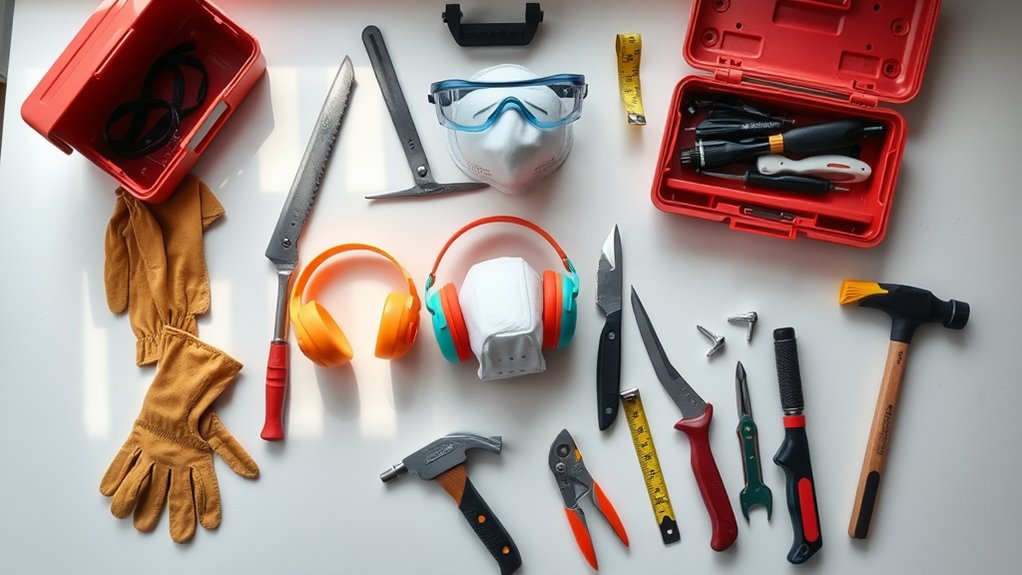
The proper tools and safety equipment are crucial before attempting any countertop removal project. Your tool selection should include a pry bar, utility knife, hammer, screwdriver set, putty knife, and drill with different bits. You’ll also need a heat gun if removing laminate countertops, and a reciprocating saw for cutting through bolts or adhesive.
For safety gear, protect yourself with safety goggles, heavy-duty work gloves, a dust mask or respirator, and steel-toed boots. If you’re working with older countertops that might contain hazardous materials, wear a proper filtration mask rated for demolition work. Keep a primary aid kit nearby and verify you’ve got adequate lighting in your work area. Don’t forget to wear clothing that covers your arms and legs to protect against sharp edges and debris.
Disconnecting Plumbing and Removing Backsplash
Before starting the physical removal of your countertops, you’ll need to address connected fixtures and wall components. Turn off the water supply valves under your sink and disconnect all plumbing connections, including drain pipes and supply lines. Keep a bucket handy to catch residual water when disconnecting pipes.
For backsplash removal, locate the caulk line where the backsplash meets the countertop. Score this line with a utility knife, then use a putty knife to carefully pry the backsplash from the wall. If it’s firmly attached, you may need to break it into sections using a hammer and chisel. Work methodically from one end to the other, being careful not to damage the wall behind it. Remove any remaining adhesive or caulk residue with a razor scraper.
Lifting and Removing the Countertop Surface
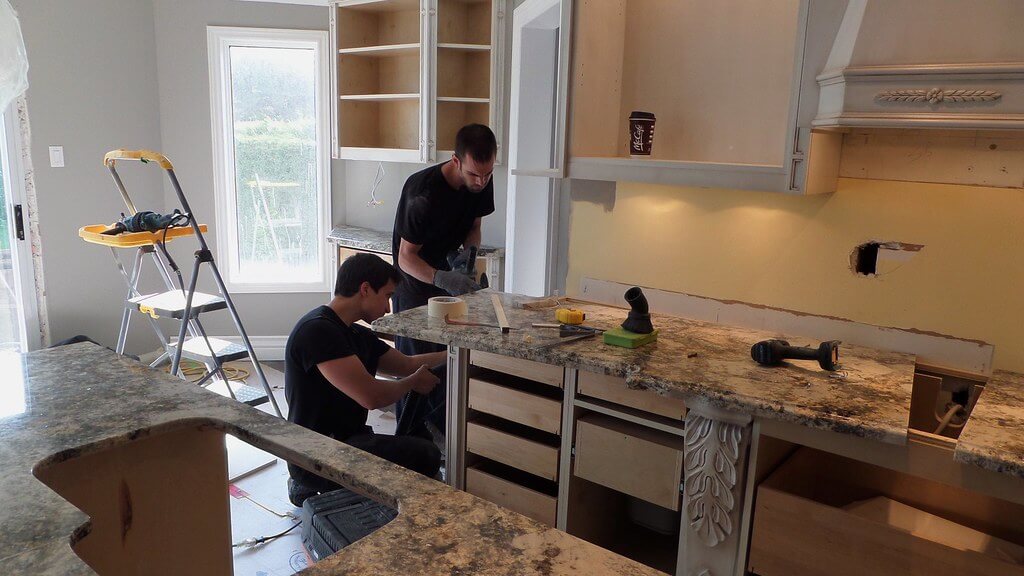
Start by locating where your countertop attaches to the base cabinets – typically along the perimeter and at support brackets. Different countertop materials require specific lifting techniques to prevent damage and injury. Use a putty knife or flat pry bar to break the caulk seal between the countertop and wall.
Before attempting removal, locate all attachment points and carefully break seals to prevent costly damage to your countertop and cabinets.
- For laminate or wood surfaces, insert shims between the countertop and cabinet top, working your way around systematically to loosen adhesive
- With stone or heavy materials, position helpers on each end while you coordinate the lift from the middle
- Remove any remaining screws or brackets, then carefully lift straight up using proper lifting techniques to avoid twisting
Once loose, slide the countertop forward slightly, checking for any missed attachments before completely removing it from the cabinet base.
Frequently Asked Questions
How Much Does Professional Countertop Removal Typically Cost?
When you hire professional services for countertop removal, you’ll typically pay between $200 to $500 for a standard kitchen. The cost breakdown includes labor ($40-$70 per hour), disposal fees ($50-$150), and equipment charges. You’ll find that pricing varies based on your countertop material, size, and location. For complex jobs involving stone or built-in appliances, costs can escalate to $800 or more. Most contractors include removal in their installation packages.
Can I Sell or Recycle My Old Countertop?
Yes, you can both sell and recycle your old countertop depending on its condition. For selling, try listing it on marketplace platforms like Facebook Marketplace, Craigslist, or local building material resale stores. You’ll have better luck if it’s in good condition with minimal damage. For countertop recycling, contact your local recycling center – many accept materials like granite, marble, and laminate. Some contractors also repurpose old countertops for smaller projects or donate them to habitat restoration centers.
Will Removing Countertops Damage My Existing Cabinets?
If you use proper countertop removal techniques, you shouldn’t damage your existing cabinets. However, you’ll need to implement specific cabinet protection methods. Start by placing plywood sheets on cabinet tops to distribute weight evenly. Cover cabinet faces with heavy-duty tape or protective film to prevent scratches. When lifting the countertop, use proper support points and avoid leveraging against cabinet frames. Remember to remove all screws and caulk before attempting separation.
How Long Should I Wait Before Installing New Countertops?
You don’t need a long waiting period between removing old countertops and installing new ones, as long as your cabinets are level and structurally sound. However, it’s best to wait 24 hours to guarantee any adhesive residue is completely dry and your cabinets have settled. During this time, you can take key installation tips into account: verify measurements, check cabinet support, and ensure your new countertop materials have properly acclimated to room temperature.
What’s the Best Season or Weather Conditions for Countertop Removal?
You’ll find the most favorable conditions for countertop removal during spring renovations when temperatures are mild and humidity levels are moderate. Aim for dry weather to prevent moisture-related complications with exposed surfaces and materials. While you can tackle this project year-round indoors, weather considerations like extreme heat or cold can affect adhesives and sealants. If you’re extending work to outdoor spaces, schedule around the forecast to guarantee ideal working conditions.