
Keep your quartz countertops gleaming with these seven pro steps: Initially, gather your supplies including mild dish soap and microfiber cloths. Next, clear the entire surface and wipe away loose debris. Apply a gentle cleaning solution of dish soap and warm water, then tackle any tough stains with targeted treatments. Rinse thoroughly and dry with a lint-free cloth. Ultimately, polish the surface for that showroom shine. Our detailed guide will transform you into a quartz cleaning expert.
Gather Your Essential Cleaning Supplies
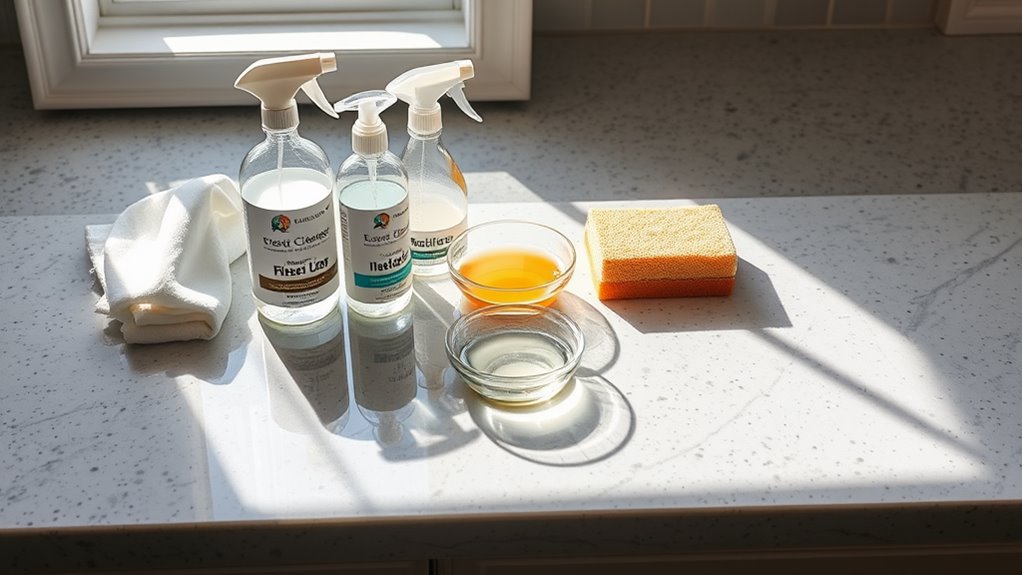
Before addressing your quartz countertop cleaning, you'll need to assemble the right supplies for effective and safe maintenance. Start with a mild dish soap and warm water as your primary cleaning tools. You'll also need a soft microfiber cloth or non-abrasive sponge for gentle wiping, plus a clean, dry microfiber cloth for buffing the surface.
For tougher stains, keep a specialized quartz cleaner on hand that's specifically formulated for stone surfaces. Among essential maintenance tips, remember to have a plastic scraper nearby for removing stuck-on residue. Don't forget paper towels for quick spill cleanup, though microfiber cloths are better for regular cleaning. Ultimately, include a spray bottle to mix your cleaning solution and apply it evenly across the surface.
Clear and Prep Your Counter Space
Start by removing all items from your quartz countertops, including decorative pieces, small appliances, and kitchen tools. Relocate your coffee maker, toaster, and other frequently used appliances to a temporary spot while you're cleaning. With your cleaning supplies now within reach, you'll have a clear, unobstructed surface ready for a thorough cleaning session.
Remove All Items First
The most essential initial step in cleaning quartz countertops is removing every item from your workspace. Despite quartz durability, you'll want to protect your small appliances, decorative items, and kitchen tools from cleaning solutions. Move everything off the counter, including coffee makers, knife blocks, paper towel holders, and dish soap dispensers.
Don't forget to check for items that might be pushed against the backsplash or tucked into corners. As part of proper countertop maintenance, you should also wipe the bottom of these items before returning them later, preventing any trapped moisture or debris from transferring back onto your clean surface. This complete clearing guarantees you'll have unrestricted access to every inch of your quartz surface, making the cleaning process more efficient and thorough.
Put Away Kitchen Appliances
Careful storage of kitchen appliances goes beyond simply clearing the counter. You'll need to properly store items like toasters, coffee makers, blenders, and mixers in designated cabinets or pantry spaces. This step is essential for thorough countertop cleaning and proper kitchen organization.
When relocating your appliances, make sure to wrap or coil their power cords neatly to prevent tangling and damage. If you're short on appliance storage space, consider installing pull-out shelves or using stackable containers to enhance cabinet capacity. For items you use daily, designate an easily accessible spot that won't interfere with your counter cleaning routine. Pay special attention to removing any appliances that might have collected crumbs, oil splatter, or coffee grounds underneath them, as these areas often need extra cleaning attention.
Get Cleaning Supplies Ready
Gathering essential cleaning supplies prepares you for effective quartz countertop maintenance. Before beginning any cleaning techniques, you'll need to assemble the right tools and products for ideal results.
- Mild dish soap or specialized quartz cleaner
- Clean, soft microfiber cloths (avoid abrasive materials)
- Warm water in a spray bottle or bowl
- Plastic scraper for stuck-on debris
Once you've gathered these supplies, you're ready to tackle your countertop maintenance with confidence. Position all your cleaning materials within easy reach of your work area. If you're using a commercial cleaner, take a moment to read the manufacturer's instructions to verify it's safe for quartz. Remember to check that your microfiber cloths are clean and free from any debris that could potentially scratch your countertop's surface.
Remove Loose Debris and Surface Dust
Before applying any cleaning solutions, begin by removing all loose particles from your quartz countertop's surface. Use a soft, dry microfiber cloth to sweep away crumbs, dust, and other loose debris. Work from one end to the other in smooth, straight motions to guarantee thorough dust removal.
For stubborn surface particles, you'll want to use a plastic scraper or putty knife, holding it at a 45-degree angle to gently lift stuck-on debris without scratching the quartz. Don't use metal tools, as they can damage the surface. Regular surface maintenance like this prevents particles from being ground into the countertop during deeper cleaning. If there's caked-on food, dampen a cloth with warm water and let it sit on the spot for a minute to soften the residue before wiping.
Apply Your Gentle Cleaning Solution
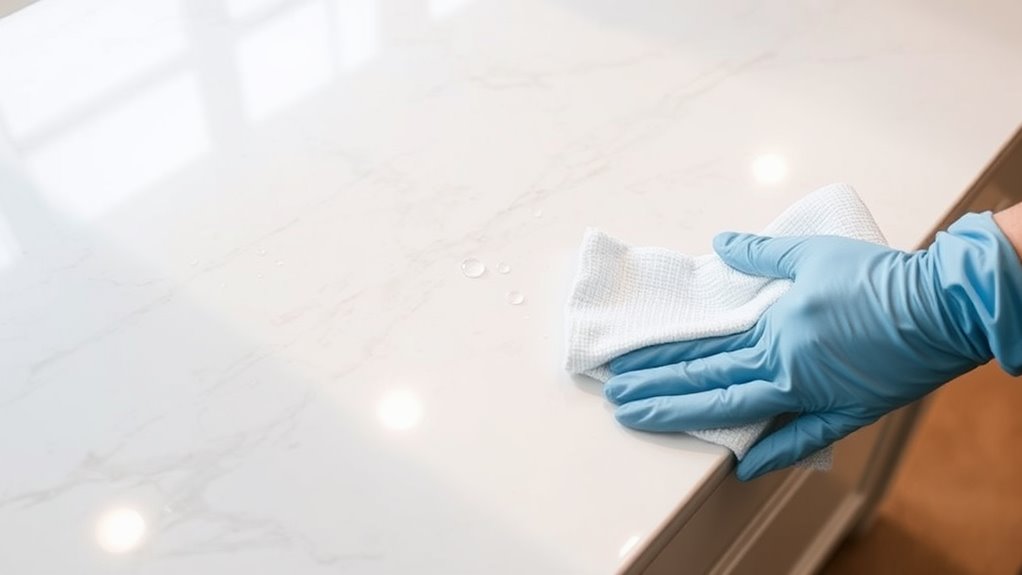
Mix a few drops of mild dish soap with warm water to create an effective and gentle cleaning solution for your quartz countertops. You'll find that natural cleaning products, such as vinegar-free stone cleaners or non-abrasive commercial quartz cleaners, work perfectly for routine maintenance. Apply your chosen solution in a gentle circular motion using a soft microfiber cloth to effectively distribute the cleaner across the surface.
Mix Soap and Water
The most effective cleaning solution for quartz countertops combines mild dish soap with warm water in a spray bottle or small bucket. When selecting soap types, opt for non-abrasive, pH-neutral dish soaps that won't damage the surface. The water temperature should be warm but not hot, as extreme temperatures can potentially harm the countertop's finish.
Mix your solution following these specific measurements:
- Add 2-3 drops of mild dish soap to 2 cups of warm water
- For spray bottles, use 1 drop of soap per cup of water
- Avoid antibacterial soaps, as they can leave a filmy residue
- Skip harsh detergents or soaps containing citrus oils
This simple mixture will effectively remove daily dirt and grime while maintaining your quartz countertop's natural luster and protective seal.
Choose Natural Cleaning Products
Several natural cleaning products offer excellent alternatives to harsh chemical cleaners when maintaining your quartz countertops. You'll find that eco-friendly cleaners protect both your surfaces and the environment while delivering excellent results.
| Natural Product | Application Method |
|---|---|
| White Vinegar | Dilute 1:1 with water |
| Lemon Juice | Apply directly, rinse well |
| Baking Soda | Make paste with water |
| Castile Soap | Few drops in warm water |
| Essential Oils | Add to base cleaner |
Create your own homemade solutions using these natural ingredients for a safe and effective clean. Mix white vinegar with water for everyday cleaning, or combine baking soda with water to tackle stubborn stains. Remember to avoid acidic cleaners on quartz, even natural ones, for prolonged contact as they may dull the surface over time.
Apply in Circular Motion
Once you've selected your preferred gentle cleaning solution, proper application technique guarantees ideal results. The circular cleaning technique guarantees even distribution of the cleaner while effectively lifting dirt and grime from your quartz surface.
- Apply your cleaning solution to a soft microfiber cloth rather than directly on the countertop to prevent oversaturation
- Use gentle, circular motions working in small 2-foot sections at a time
- Maintain consistent pressure during your effective scrubbing methods to avoid creating uneven clean spots
- Follow behind your cleaning with a separate dry microfiber cloth to prevent streaking
Tackle Tough Stains and Dried Spills
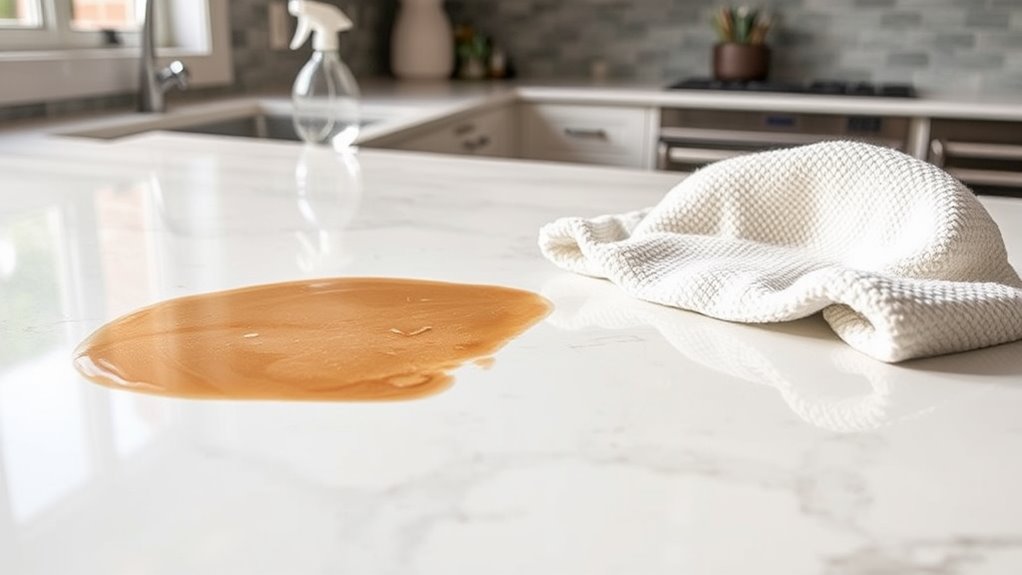
Dealing with stubborn stains and dried spills on quartz countertops requires a methodical approach and specific cleaning solutions. For effective stain removal, you'll need to identify the type of stain before treating it. Don't let spills sit, as spill prevention is always easier than treatment.
| Stain Type | Solution | Wait Time |
|---|---|---|
| Wine/Coffee | Baking soda paste | 10 minutes |
| Grease | Degreasing spray | 5 minutes |
| Dried food | Plastic scraper | Immediate |
| Hard water | Vinegar solution | 15 minutes |
For dried substances, initially scrape the surface gently with a plastic scraper. Then apply your cleaning solution and let it sit according to the stain type. Don't use abrasive scrubbers or harsh chemicals, as they'll damage the quartz's surface. Ultimately, wipe the area clean with a soft, damp microfiber cloth.
Rinse and Dry the Surface Thoroughly
The final step in cleaning your quartz countertop requires thorough rinsing and proper drying to prevent water spots and streaks.
After you've tackled stains and cleaned the surface, employ these essential rinsing techniques and drying methods:
- Use clean, warm water to rinse away all cleaning solution residue, working in small sections from back to front
- Wipe with a microfiber cloth in circular motions to guarantee complete removal of cleaning agents
- Follow immediately with a dry, lint-free cloth to prevent water spots from forming
- Inspect the surface under good lighting to check for any missed spots or streaks
Don't skip this vital final step – proper rinsing and drying will maintain your quartz countertop's lustrous appearance. A well-executed finish guarantees your surface remains spotless and streak-free until your next cleaning session.
Polish for a Professional Finish
While regular cleaning maintains your quartz countertop's functionality, adding a final polish improves its appearance to a professional standard. To achieve this shine, you'll need specialized professional products designed specifically for quartz surfaces.
Apply your chosen polish using a clean, soft microfiber cloth in small, circular motions. Don't saturate the surface; instead, use minimal product and work in sections. Pay special attention to high-traffic areas where dulling commonly occurs. These polishing techniques help restore your countertop's natural luster without damaging the surface.
For best results, polish your quartz monthly or whenever you notice the shine diminishing. Keep in mind that quartz doesn't require sealing like natural stone, so avoid products containing sealants. Once you've finished polishing, buff the surface with a dry microfiber cloth to remove any remaining residue.
Frequently Asked Questions
How Often Should I Professionally Reseal My Quartz Countertop?
You don't need to reseal your quartz countertop – ever. Unlike natural stone, quartz is engineered with resins that make it non-porous, eliminating the need for periodic resealing as part of your residential maintenance routine. This permanent seal is one of quartz's main advantages, contributing to its exceptional countertop longevity. Just maintain regular cleaning, and your quartz countertop will retain its durability and luster for years without professional resealing services.
Can I Use Bleach on Colored Quartz Without Causing Discoloration?
Don't use bleach on your colored quartz countertops as it can damage and discolor the surface. Instead, opt for safer bleach alternatives like hydrogen peroxide or vinegar mixed with water. For proper quartz maintenance, stick to pH-neutral cleaners specifically designed for quartz surfaces. You'll protect your investment and maintain the countertop's vibrant color by using gentle cleaning solutions. If you need to disinfect, use a non-bleach antibacterial cleaner approved for quartz.
What's the Expected Lifespan of a Properly Maintained Quartz Countertop?
A properly maintained quartz countertop can last 20-30 years or more, making it one of the most durable countertop options you'll find. To enhance your countertop longevity, you'll want to follow basic maintenance tips: clean spills promptly, use cutting boards, avoid excessive heat, and clean with pH-neutral cleaners. You won't need to seal or refinish it like natural stone, and with consistent care, your quartz countertop will maintain its beauty for decades.
Are There Specific Cleaning Products That Can Void My Quartz Warranty?
Yes, you'll want to be careful as certain cleaning products can void your quartz warranty. Avoid using abrasive cleaners, bleach, nail polish remover, or any products containing high alkaline or pH levels. These can damage the resin binding your quartz. Also steer clear of paint strippers, furniture cleaners, oil soaps, and vinegar-based solutions. Stick to mild dish soap and specialized quartz cleaners to maintain your warranty's validity and protect your investment.
How Do I Repair Small Chips or Scratches in My Quartz Surface?
For minor quartz damage, you'll want to act quickly. Small chips can be fixed using a specialized quartz chip repair kit, which includes color-matched epoxy resin. For surface scratches, try a gentle polishing compound designed specifically for quartz. Don't attempt major repairs yourself, as this could void your warranty. If the damage is significant, it's best to contact a certified quartz professional who can properly assess and repair the surface.