
You’ll need 1.5 inches of standard countertop overhang from your cabinet face for interior edges. For breakfast bars and eating areas, extend the overhang to 10-12 inches to accommodate comfortable seating. Kitchen islands require 12-15 inches of overhang for proper legroom. Support brackets become necessary when overhangs exceed 6 inches for laminate or 12 inches for stone surfaces. The specific material you choose will determine your maximum safe overhang and support requirements.
Standard Countertop Overhang Measurements

Standard countertop overhangs measure 1.5 inches from the face of the cabinet on all interior sides and typically extend 1-1.5 inches on the sides against walls. For breakfast bars and eating areas, you’ll need 10-12 inches of overhang to accommodate comfortable seating and leg room.
When working with different countertop materials, the overhang requirements may vary. Natural stone and quartz can extend up to 12 inches without support, while laminate shouldn’t exceed 6 inches without supplementary bracing. Installation techniques often include corbels or brackets for overhangs greater than these limits.
For wheelchair accessibility, you’ll want a minimum clearance of 15 inches underneath and a height of 28-34 inches from the floor. This guarantees proper knee space while maintaining ergonomic functionality for all users.
Kitchen Island Overhang Guidelines
Kitchen islands require longer overhangs of 12-15 inches if you’re planning to accommodate seating, compared to the standard 1.5-inch overhang for regular countertops. You’ll need to guarantee proper structural support using corbels, brackets, or steel plates when extending beyond 12 inches to prevent sagging and maintain safety. For comfortable knee clearance at an island eating area, you should maintain a minimum height of 30 inches from the floor to the bottom of the countertop overhang.
Standard Overhang Measurements
The ideal overhang depth for kitchen islands typically ranges from 12 to 15 inches, ensuring comfortable seating while maintaining structural integrity. This measurement balances overhang aesthetics with overhang functionality, creating a practical space for dining and socializing.
For standard countertop configurations, follow these essential measurements:
- Base cabinets: 1.5 inches of overhang from the cabinet face
- Breakfast bars without seating: 4 to 6 inches of projection
- Eating areas with bar stools: 8 to 12 inches for optimal knee clearance
- Countertop edges: 1 inch minimum overhang to prevent cabinet wear
You’ll need to take into account the countertop material’s strength when planning larger overhangs. Materials like granite and quartz can extend further without support, while laminate typically requires supplementary bracing beyond 6 inches of overhang.
Space for Seating Requirements
Proper seating arrangements demand specific overhang measurements to ascertain comfortable dining experiences at your kitchen island. For standard-height counters (36 inches), you’ll need a minimum overhang of 12 inches to accommodate seating comfortably. If you’re planning bar-height counters (42 inches), maintain a 12-inch overhang to guarantee ideal comfort levels.
To enhance your seating arrangement options, consider extending the overhang to 15-18 inches. This extra space allows guests to cross their legs and provides more knee clearance. When planning for multiple seats, allow 24-30 inches of width per person. Remember to account for proper toe kick space beneath the counter, typically 3-4 inches deep, to prevent feet from hitting the base cabinets while seated.
Structural Support Guidelines
Maintaining structural integrity requires specific support guidelines based on your countertop’s overhang depth. Proper weight distribution is vital to prevent sagging and guarantee long-term stability of your countertop installation.
- For overhangs up to 6 inches: No extra support needed; the cabinet base provides sufficient stability
- For overhangs between 8-12 inches: Install decorative brackets every 24 inches, positioned 6 inches from the countertop edge
- For overhangs 12-15 inches: Use heavy-duty corbels or metal brackets every 18 inches, extending at least 2/3 of the overhang depth
- For overhangs exceeding 15 inches: Install steel support frames or plates underneath, spanning the entire overhang width
These guidelines apply to standard countertop materials like granite, quartz, or marble with typical thicknesses of 1.25 to 1.5 inches.
Breakfast Bar Seating Requirements
Comfortable breakfast bar seating requires specific overhang measurements to accommodate people’s legs and prevent knee bumping. For standard 36-inch counter heights, you’ll need a minimum overhang of 12 inches, though 15 inches provides ideal comfort. If you’re planning raised bar-height seating at 42 inches, allow for a 12-inch overhang.
When designing your breakfast bar seating arrangements, factor in 24 inches of width per person to prevent crowding. The space between the floor and the bottom of the countertop should measure 25 inches for standard height, or 31 inches for bar height. These dimensions guarantee guests can cross their legs comfortably and slide bar stools in and out without difficulty. Remember to account for any decorative edge treatments or mounting brackets when calculating final overhang measurements.
Factors Affecting Overhang Dimensions
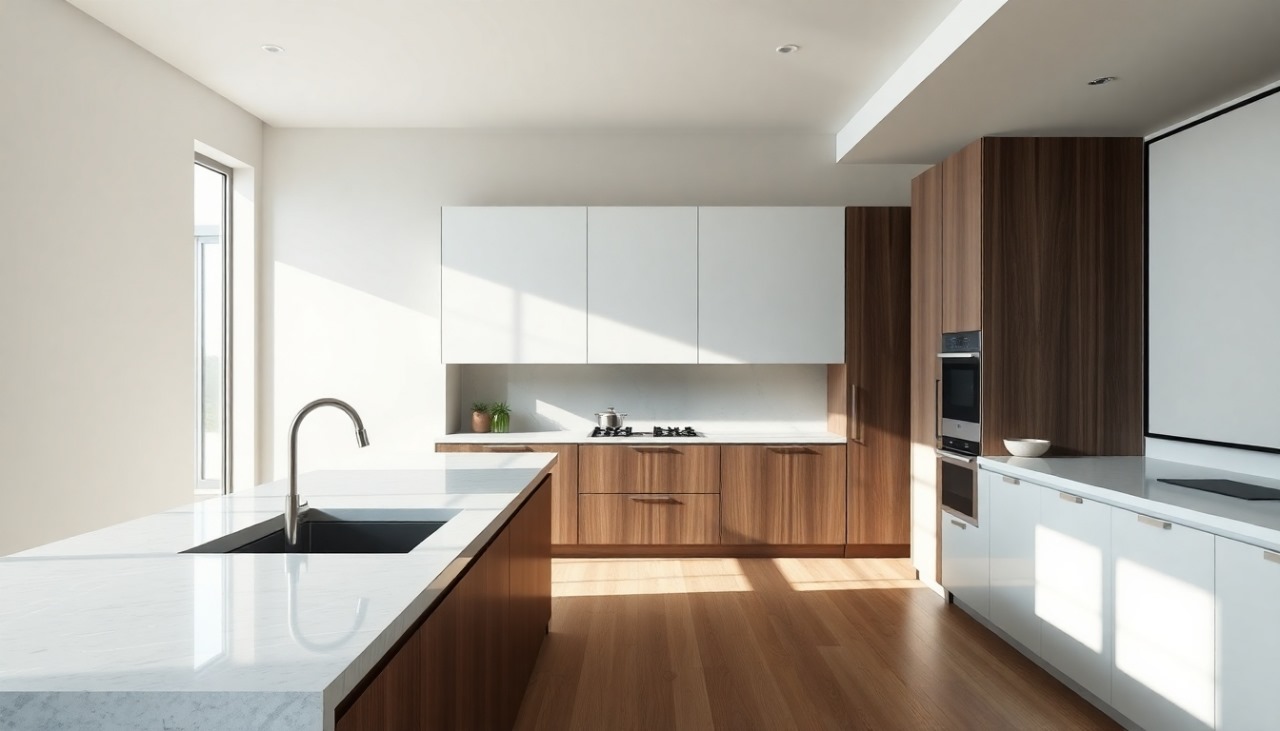
Several key variables determine the ideal countertop overhang dimensions for your kitchen design. When planning your overhang, you’ll need to take into account both design aesthetics and functional balance to create a practical workspace that meets your needs.
Key factors that influence your overhang dimensions include:
- Material thickness – Thicker countertops can extend further without extra support
- Support bracket placement – The type and spacing of brackets affect maximum safe overhang
- Usage requirements – Different activities need varying amounts of space (food prep vs. dining)
- Seating configuration – Chair or stool dimensions impact necessary knee clearance
Your countertop material’s structural properties will dictate whether you need extra support for overhangs exceeding 12 inches. For stone surfaces, you’ll typically want support brackets every 24-30 inches to prevent sagging or cracking.
Support Requirements for Extended Overhangs
For overhangs exceeding 12 inches, you’ll need support brackets installed every 24-30 inches to prevent sagging and potential breakage. You can extend your countertop up to 18 inches with proper L-brackets or corbels, though anything beyond that requires supplementary structural reinforcement. Your material choice directly impacts support needs – while granite and quartz require brackets for extensions over 10 inches, laminate and wood countertops can typically extend 12 inches before needing supplementary support.
Support Brackets and Spacing
When your countertop extends beyond standard measurements, proper support becomes essential for both safety and stability. Support bracket types range from decorative corbels to hidden flat steel brackets, allowing you to balance overhang aesthetics with functional requirements.
For ideal support, follow these key spacing guidelines:
- Install brackets every 24 inches along overhangs greater than 12 inches
- Position initial bracket within 3 inches of the countertop’s end
- Use minimum 2/3 bracket depth relative to overhang length
- Space brackets maximum 6 inches from seams or joints
Choose brackets rated for your countertop’s weight, typically ranging from 300 to 500 pounds per bracket. Heavy materials like granite require stronger support compared to lighter materials such as laminate. Remember to secure brackets directly into wall studs or solid backing for maximum stability.
Maximum Unsupported Extension Limits
Different countertop materials have strict limits for unsupported extensions before requiring extra bracing. For granite and quartz, you’ll need support if the overhang exceeds 10 inches. Marble can extend 8 inches unsupported, while wood countertops shouldn’t project more than 6 inches without bracing.
Solid surface materials like Corian can handle up to 6 inches of unsupported overhang, maintaining both structural integrity and overhang aesthetics. For laminate countertops built on particleboard or MDF, limit unsupported extensions to 6 inches maximum. These restrictions exist because excessive unsupported materials can lead to sagging, cracking, or complete failure over time. When planning your countertop design, factor in these material-specific limitations to determine if you’ll need supplementary support structures beneath your overhang.
ADA Compliance and Universal Design Considerations

While standard countertop overhangs work for many households, ADA-compliant spaces require specific measurements to accommodate wheelchair users and those with mobility challenges. When designing for accessible design and ergonomic factors, you’ll need to follow these essential guidelines:
Creating accessible spaces isn’t optional – it’s essential for ensuring everyone can navigate and use kitchen workspaces comfortably and safely.
- Maintain a minimum overhang of 17-19 inches for wheelchair knee clearance
- Keep the bottom edge of the overhang at least 27 inches above the floor
- Provide a total height of 28-34 inches from floor to countertop surface
- Provide a clear floor space of 30×48 inches in front of the workspace
These specifications guarantee comfortable reach zones and adequate legroom for seated users. You’ll want to take into account these measurements during your initial design phase, as retrofitting for ADA compliance later can be more costly and complicated.
Common Overhang Mistakes to Avoid
Despite careful planning, homeowners often make several critical mistakes with their countertop overhangs that can impact functionality and safety.
Don’t undersize your overhang, as anything less than 8 inches at a breakfast bar won’t accommodate knee space properly. Avoid excessive overhangs beyond 12 inches without proper support, which can lead to sagging and potential breakage. You’ll compromise overhang safety by skipping reinforcement brackets when extending past 6 inches on stone countertops.
Another common error is neglecting overhang aesthetics by failing to maintain consistent dimensions throughout your kitchen. Don’t ignore height requirements when planning bar-height overhangs – they should be 42 inches from the floor, not the standard 36 inches. Remember to factor in material thickness and support structures during the planning phase to prevent costly modifications later.
Material-Specific Overhang Recommendations
Each countertop material has unique structural properties that determine its maximum safe overhang length. You’ll need to match the material’s strength with the appropriate unsupported overhang distance to prevent sagging or breakage.
- Natural stone (granite, marble): Maximum 12-inch overhang without support; extend to 15 inches with proper corbels or brackets
- Engineered materials (quartz): Can safely extend 14 inches without support; up to 16 inches with reinforcement
- Laminate and wood: Limit overhang to 6-8 inches due to potential warping; support required beyond 8 inches
- Concrete: Maximum 12-inch unsupported overhang; can extend to 15 inches with steel reinforcement
For overhangs exceeding these recommendations, you’ll need supplementary support every 18-24 inches. Thicker slabs generally allow for slightly longer unsupported spans regardless of material choice.
Cost Implications of Different Overhang Options
The costs associated with countertop overhangs vary greatly based on both material choice and support requirements. For standard 12-inch overhangs, you’ll typically pay only for the extra overhang materials. However, when extending beyond 12 inches, you’ll need to factor in support bracket costs, ranging from $20-$50 per bracket, with installation typically requiring one bracket every 24 inches.
Premium overhang materials like granite or quartz can increase $40-$100 per square foot to your project, while laminate options remain more economical at $20-$30 per square foot. Installation costs increase greatly when corbels or decorative supports are needed, adding $75-$200 per support. If you’re planning for a breakfast bar with a 15-18 inch overhang, expect to budget an extra 15-25% above your base countertop cost.
Frequently Asked Questions
Can I Install a Dishwasher Under a Countertop With Minimal Overhang?
You’ll need at least 24 inches of countertop clearance for proper dishwasher installation, regardless of overhang. The critical factor is having adequate space beneath the counter for the unit’s height (typically 33.5-35 inches) and width (23.75-24 inches). While minimal overhang won’t affect functionality, make certain you’ve got proper mounting brackets and support. Check your dishwasher’s installation manual for specific requirements, as dimensions can vary between models.
Does Cabinet Color Affect How Much Overhang Appears Visually Balanced?
Yes, your cabinet color greatly impacts the visual perception of countertop overhang proportions. Darker cabinets tend to create a shadow effect, making standard overhangs appear smaller, while lighter cabinets can make the same overhang look more pronounced. To achieve visual harmony, you might want to adjust your overhang by 1/2 inch more for dark cabinets or reduce it slightly for light ones. The key is maintaining balanced proportions between your cabinet facade and countertop projection.
How Do I Clean and Maintain the Underneath Portion of Countertop Overhangs?
You’ll want to regularly clean the underneath portion of your countertop overhang to prevent dust and grease buildup. Start with a microfiber cloth to wipe down the surface every 1-2 weeks. For deeper cleaning techniques, use a gentle all-purpose cleaner and work in small 6-inch sections. Key maintenance tips include checking for moisture accumulation every 3 months and ensuring proper ventilation. If you’ve got support brackets, don’t forget to clean around their mounting points.
Can I Modify Existing Countertop Overhangs Without Replacing the Entire Surface?
You can modify existing countertop overhangs through several methods, but you’ll need to take into account structural integrity. For minor adjustments, you can trim up to 2 inches using a circular saw with the appropriate blade. For extending overhangs, you can add support brackets or corbels spaced every 24 inches. Keep in mind that overhang design considerations include weight distribution and material limitations. Professional consultation is recommended for modifications exceeding 4 inches to guarantee proper support and safety.
What’s the Ideal Overhang Height From Floor for Children’s Accessibility?
For ideal child height accessibility, you’ll want to position your countertop 26-29 inches from the floor for children 5-8, and 29-32 inches for children 9-12. These accessibility features allow children to safely reach and work at the surface. Consider installing adjustable brackets or creating a multi-level counter setup to accommodate growing kids. You can also add a sturdy step stool for temporary height solutions, but make sure it has non-slip features for safety.