
When you're planning your kitchen, the standard depth for countertops usually falls between 24 to 26 inches. This range not just meets the needs of cabinetry but also provides ample workspace for various tasks. Whether you're chopping veggies or mixing up delicious batter, a deeper surface enhances your comfort and efficiency. Consider your material choice too—from sleek granite to rustic butcher block, each brings its unique flair. Custom depths can further tailor your kitchen to your cooking style and aesthetic. Your perfect countertop depth is just the beginning of your kitchen transformation adventure!
Standard Depth Measurements
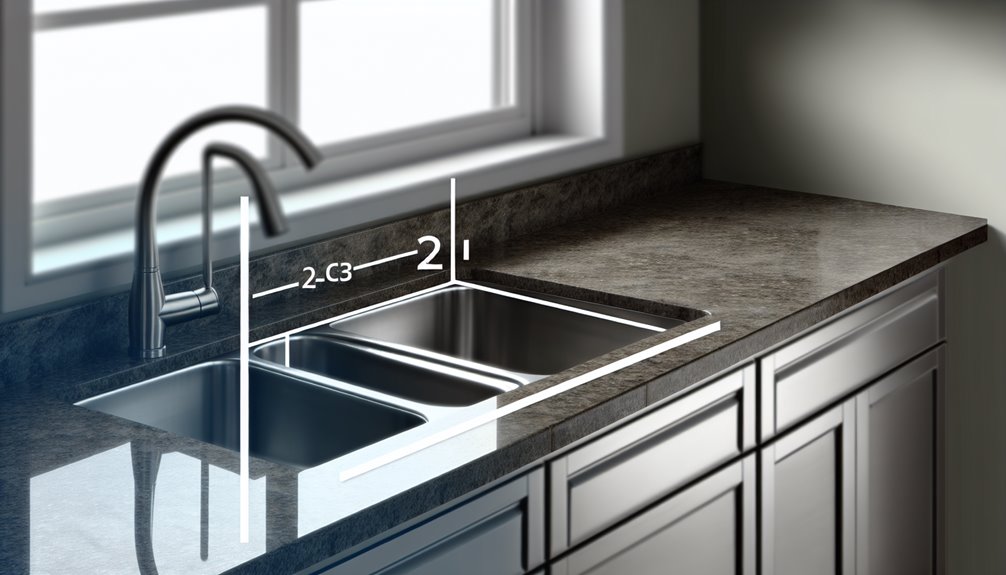
In relation to kitchen design, understanding standard depth measurements for countertops is vital for creating both functionality and aesthetic appeal. Typically, countertop depths range from 24 to 26 inches, a dimension that complements standard cabinetry and provides ample workspace. This standardization guarantees you can easily navigate your kitchen, whether you're chopping vegetables or arranging a buffet.
When selecting countertop materials, these depth measurements play an important role. For instance, a thicker slab of granite or quartz can create a more substantial visual impact while maintaining the standard depth. You'll want to choose materials that not just fit the depth but also harmonize with your overall kitchen theme—think sleek marble for a modern vibe or rustic butcher block for a cozy feel.
Additionally, consider how the depth affects your appliances and backsplash. A well-measured countertop can seamlessly integrate with your kitchen design elements, assuring a cohesive look.
Factors Affecting Countertop Depth
Countertop depth isn't just a matter of standard measurements; several factors can influence your decision when designing your kitchen.
First, think about the countertop materials you'll be using. Different materials, like granite or laminate, might've specific thicknesses that can affect overall depth. A thicker stone countertop may look stunning, but it can also alter your kitchen's visual balance.
Next, consider ergonomic considerations. Your comfort while cooking and preparing food is essential. If you're taller or shorter than average, you might want a deeper or shallower countertop to maintain a comfortable working height. A well-designed kitchen should feel intuitive, so take your height into account when selecting depth.
Moreover, the kitchen's layout plays a significant role. If you're integrating appliances or a breakfast bar, the depth may need to adjust to create a seamless flow.
Finally, think about your personal style and how depth can enhance your kitchen aesthetics. A deeper countertop can offer a more luxurious feel, while a standard depth keeps things simple and practical.
In the end, every choice you make should reflect your lifestyle and preferences, creating a space that's both functional and beautiful.
Depth Considerations for Specific Tasks
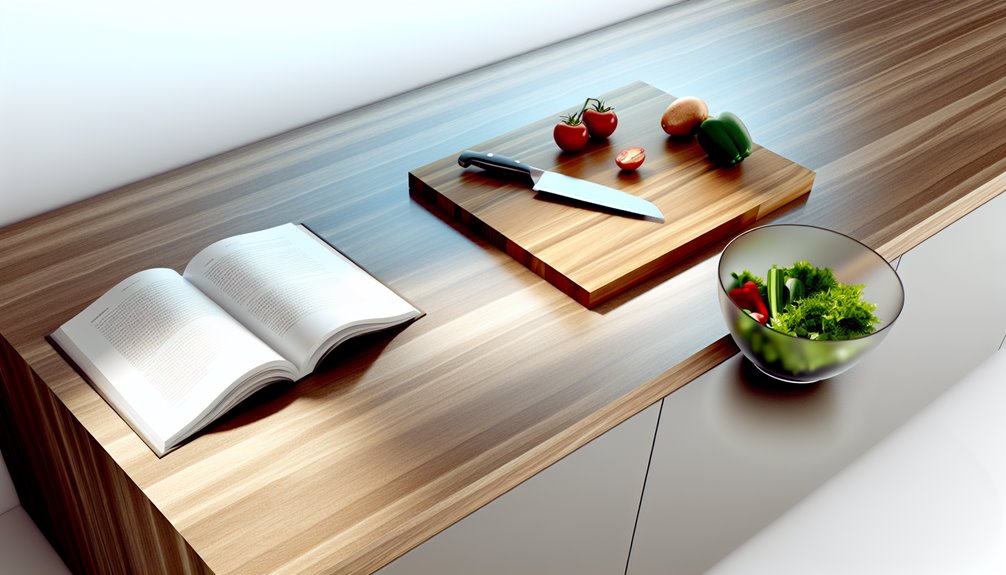
When planning your kitchen, it's crucial to contemplate how depth impacts specific tasks like chopping, mixing, or even baking. The right countertop depth can greatly enhance your ergonomic design, allowing you to work comfortably and efficiently.
Consider these key aspects:
- Chopping: A deeper countertop allows for ample space when using cutting boards, promoting better posture.
- Mixing: Adequate depth provides room for mixing bowls and kitchen gadgets, streamlining your workflow.
- Baking: When rolling dough, you'll appreciate the extra room to maneuver without feeling cramped.
- Food Prep: Greater depth offers room for prepping multiple ingredients simultaneously, boosting task efficiency.
Custom Depth Options
Choosing the right depth for your kitchen countertops can transform how you interact with your space, ensuring it fits your unique cooking style and preferences. If standard options don't quite cut it for you, custom depth solutions offer a world of design flexibility.
Imagine countertops perfectly suited to your height, cooking habits, or even the types of appliances you use.
With custom depth options, you can create a kitchen that feels tailor-made. For instance, if you often cook elaborate meals, a deeper countertop can provide ample prep space, allowing you to spread out ingredients and tools without feeling cramped.
Alternatively, if you prefer compact arrangements, a shallower depth can encourage a more intimate cooking experience.
Custom depths also allow you to play with proportions and aesthetics. A bold, deeper countertop can serve as a striking focal point, while a more understated option can blend seamlessly into your kitchen's design.
Tips for Selecting Depth
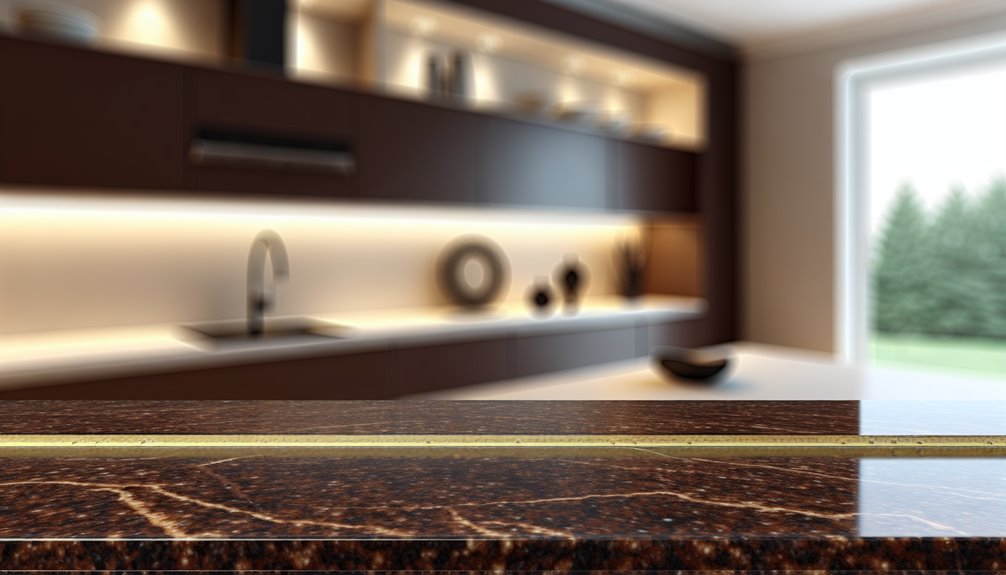
Finding the perfect depth for your kitchen countertops can greatly enhance both functionality and style.
It's crucial to evaluate how you use your kitchen, ensuring that the depth complements your cooking habits and overall design. Here are some tips to guide your selection:
- Assess Your Space: Measure your kitchen layout to visualize how different depths will fit.
- Prioritize Comfort: Aim for kitchen ergonomics; a depth that feels natural to work at can reduce strain.
- Think About Storage: Deeper countertops can provide more space for appliances and storage solutions, enhancing space optimization.
- Balance Aesthetics: Choose a depth that aligns with your kitchen's overall theme for a cohesive look.
When selecting countertop depth, keep in mind that it should reflect your personal style as well as cater to your practical needs.
A well-thought-out depth can make your kitchen more user-friendly and efficient, helping you whip up culinary masterpieces with ease.
Frequently Asked Questions
What Is the Standard Height of Kitchen Countertops?
When considering countertop measurements, the standard height for kitchen countertops is usually around 36 inches.
This height balances functionality and comfort, ensuring an ergonomic design that suits most people. If you're taller or shorter, adjusting the height can enhance your cooking experience.
Trendy designs now incorporate varying heights for specific tasks, like baking or chopping, so don't hesitate to customize your space for optimal convenience and style.
You'll love how it transforms your kitchen!
How Do Countertop Depths Affect Appliance Installation?
Regarding appliance installation, countertop depths can make or break your kitchen dreams—it's like trying to fit a whale into a tiny fishbowl!
If your countertops are too shallow, you'll face major installation challenges with dishwashers and ovens, risking compatibility issues.
You need to guarantee your appliances align perfectly with your countertop depth to avoid headaches.
Can Countertop Depth Impact Kitchen Traffic Flow?
Absolutely, countertop depth can greatly impact kitchen traffic flow.
If you've got a deeper countertop, it can create barriers that might disrupt movement, especially in tight kitchen layouts. This affects your countertop ergonomics, making it harder to navigate around appliances and other elements.
You'll want to make sure your layout promotes a smooth flow, allowing you to cook and entertain without constantly dodging obstacles. A well-planned depth helps keep your kitchen functional and stylish.
What Materials Are Best for Deeper Countertops?
If you're pondering the best materials for deeper countertops, think of it like choosing a classic vinyl record over digital music; there's an undeniable charm.
Quartz offers exceptional material durability, resisting scratches and stains while boasting stunning aesthetic appeal.
Marble, with its luxe finish, elevates your space but needs more maintenance.
For a modern twist, consider concrete or reclaimed wood; they're trendy and bring character, transforming your kitchen into a stylish haven.
Are There Regulations for Countertop Depth in Commercial Kitchens?
When you're designing a commercial kitchen, you've got to take into account countertop standards and commercial regulations.
These guidelines often dictate the depth to guarantee efficiency and safety in food preparation. While there's no universal depth requirement, many jurisdictions recommend a minimum of 24 inches to accommodate equipment and workflow.
Staying compliant not solely keeps your kitchen functional but also enhances the overall aesthetic, helping you create a trendy and efficient workspace.
Conclusion
In the grand design of your kitchen, countertop depth is the sturdy foundation upon which culinary creativity flourishes. Whether you're whisking up a gourmet meal or simply enjoying a morning coffee, the right depth can enhance both comfort and functionality. As you explore custom options and factor in your specific needs, remember that your kitchen isn't just a space—it's a canvas for your culinary artistry. Choose wisely, and let your countertop be the stage for your gastronomic delights.