
Butcher block countertops offer a perfect mix of beauty and durability, transforming your kitchen into a warm, inviting space. Their natural wood grain patterns enhance any design, while resilient surfaces withstand daily use without deep scratches. Maintenance is a breeze—just a simple wipe down keeps it clean, and occasional oiling preserves its charm. Plus, wood's natural antibacterial properties keep your food prep areas safe. They're a sustainable choice, crafted from renewable materials. Not just do they elevate your kitchen's aesthetic, but they can also boost your home's value. Discover the practical tips and tricks for maximizing their benefits!
Aesthetic Appeal
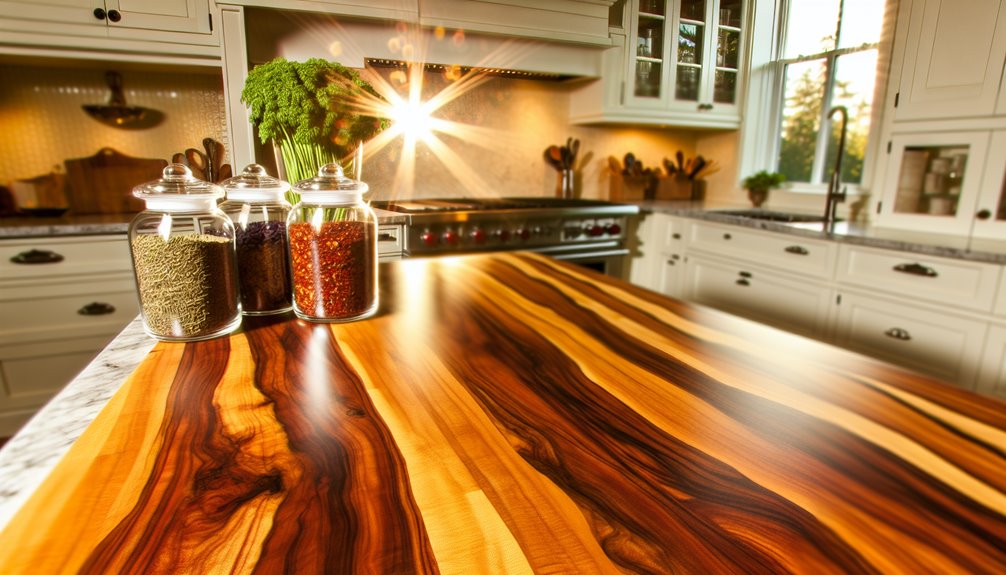
Butcher block countertops offer a unique aesthetic appeal that can transform any kitchen into a warm and inviting space. These surfaces, crafted from hardwoods like maple or walnut, create a rich, natural look that complements a variety of design trends.
You'll find that the organic grain patterns and textures add depth and character, making your kitchen feel both stylish and homey.
When choosing color combinations, butcher block countertops excel at harmonizing with other elements in your kitchen. Pair them with white cabinetry for a classic contrast, or opt for bold hues to create a striking focal point.
They also work beautifully with stainless steel appliances, enhancing the modern vibe while maintaining that rustic charm.
As you explore various design trends, consider incorporating open shelving or decorative accents that showcase your butcher block.
Whether you lean in the direction of a farmhouse style or a sleek contemporary look, these countertops adapt seamlessly.
Durability and Longevity
When you choose butcher block countertops, you're investing in a surface that stands up to the rigors of daily use, resisting scratches and dings with remarkable resilience.
If wear and tear occur, you can easily restore the surface to its former glory with a simple sanding and oiling process.
Over time, this maintenance not just prolongs the lifespan of your countertops but also enhances their cost-effectiveness, making them a smart choice for your kitchen.
Resilience to Scratches
With their unique combination of natural beauty and sturdy functionality, butcher block countertops are a smart choice for any kitchen. One of the standout features you'll appreciate is their impressive scratch resistance. Unlike many other materials, butcher block is designed to withstand the rigors of daily use.
When you chop, slice, or dice, the surface protects itself thanks to the natural properties of the wood fibers. These fibers can absorb minor impacts, which helps prevent deep scratches from forming. This resilience not only enhances the countertop's longevity but additionally maintains its aesthetic appeal.
With regular maintenance, such as oiling, you can further boost the surface protection, ensuring your countertops remain both functional and beautiful over time.
Moreover, if you do notice surface scratches, they're usually shallow and can be easily buffed out with minimal effort. This characteristic means you can focus on cooking and entertaining without worrying about damaging your investment.
Repairability of Surface
The remarkable repairability of butcher block countertops stands out as a significant advantage, enhancing their durability and longevity. Unlike other materials that may require replacement upon damage, you can easily perform a surface repair on butcher block. If you notice scratches, dents, or stains, a little sanding can work wonders. Gently sand the affected area with fine-grit sandpaper until the surface is smooth, then wipe it down to remove any dust.
To keep your countertops looking pristine, follow some simple maintenance tips. Regularly apply mineral oil or a specialized wood conditioner to nourish and protect the wood. This not only maintains its luster but also helps prevent moisture from penetrating and causing damage.
If you encounter stubborn stains, a paste made of baking soda and water can be a gentle yet effective solution.
Long-Term Cost Effectiveness
Repairing butcher block countertops not just enhances their appearance but also contributes to their long-term cost effectiveness. By choosing these surfaces, you're making an affordable investment in your kitchen's future.
Butcher block is crafted from durable hardwoods, giving it the ability to withstand the rigors of daily cooking while maintaining its structural integrity over time.
Unlike other materials that may chip, crack, or fade, butcher block offers the unique advantage of being easily sanded and refinished. This means you can address wear and tear without the need for a costly replacement.
In fact, regular maintenance, like oiling and repairing, extends the life of your countertops, ultimately leading to significant long-term savings.
Additionally, butcher block countertops can increase your home's value. Potential buyers often appreciate the warmth and character of wood, making it a desirable feature during resale.
So, as you consider your options, remember that the upfront cost of butcher block is often offset by its longevity and low maintenance needs.
In the end, investing in butcher block countertops isn't just a choice; it's a smart, economical decision for your kitchen.
Ease of Maintenance
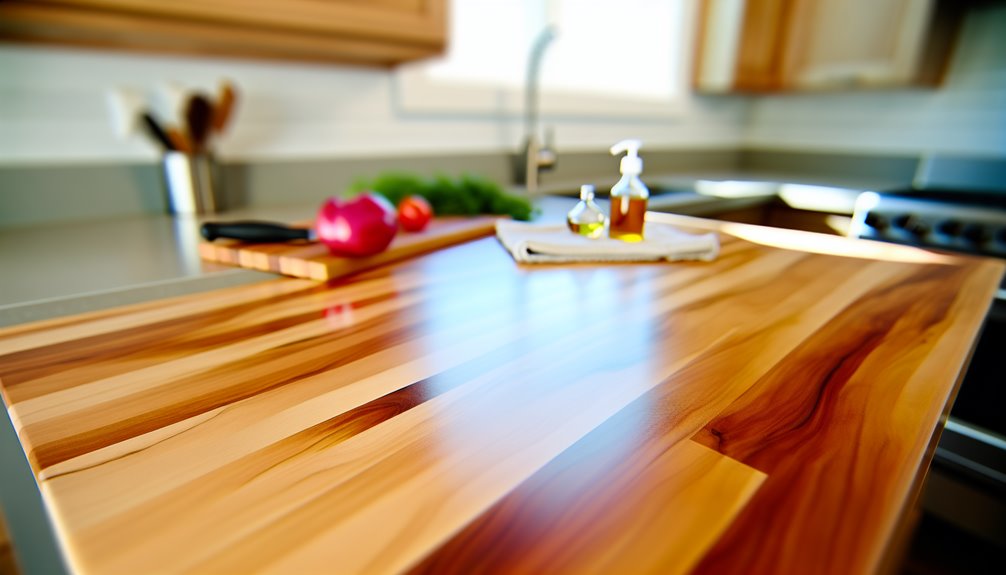
Maintaining butcher block countertops is a straightforward task that many homeowners appreciate.
With a little regular upkeep, you can keep your surfaces looking beautiful and functional.
Here's how to simplify the cleaning process:
- Wipe down daily: Use a damp cloth to remove crumbs and spills.
- Use a gentle soap: For deeper cleaning, a mild dish soap works wonders.
- Avoid soaking: Never submerge your countertops in water; it can cause warping.
- Oil regularly: Apply mineral oil every few weeks to preserve the wood's natural beauty and prevent drying.
- Sand as needed: For scratches or stains, lightly sand the affected area and reapply oil.
Natural Antibacterial Properties
Butcher block countertops offer unique natural resistance to bacteria, making them an ideal choice for your kitchen.
Their porous surface can actually trap and kill harmful microorganisms, ensuring your food preparation area stays safe.
Plus, with just a simple wipe down, you can maintain a clean and hygienic workspace effortlessly.
Wood's Natural Resistance
Wood inherently possesses natural antibacterial properties that can enhance the hygiene of your kitchen. This means you can feel confident preparing meals on butcher block countertops, knowing they resist harmful bacteria more effectively than many other materials.
The specific wood species you choose can amplify these benefits, as some offer superior resistance due to their unique cellular structure.
Consider these advantages of wood's natural resistance:
- Self-Cleaning: Wood can absorb moisture, allowing bacteria to be trapped and die off faster.
- Variety of Wood Species: Hardwoods like maple and walnut have higher antibacterial properties compared to softer woods.
- Environmental Impact: Sustainable sourcing of wood species guarantees you're making an eco-friendly choice that supports responsible forestry.
- Aesthetic Appeal: The natural grains and colors of wood enhance your kitchen's beauty while providing functionality.
- Durability: Butcher block countertops can withstand daily use, making them a long-lasting investment.
Easy to Clean
Cleaning your kitchen surfaces doesn't have to be a chore, especially with butcher block countertops that boast natural antibacterial properties. These countertops can help you maintain a hygienic kitchen environment, making surface sanitization a breeze. Because wood has the unique ability to absorb moisture and inhibit bacterial growth, you can confidently prepare food without worrying about harmful germs.
Here are some effective cleaning techniques to keep your butcher block looking great:
| Cleaning Technique | Frequency | Recommended Products |
|---|---|---|
| Wipe with a damp cloth | Daily | Mild dish soap, warm water |
| Oil treatment | Monthly | Food-grade mineral oil |
| Deep clean | Every 3 months | Vinegar solution |
| Repair scratches | As needed | Sandpaper, mineral oil |
Safe Food Preparation
When preparing food, safety is paramount, and butcher block countertops offer a unique advantage due to their natural antibacterial properties. Unlike synthetic surfaces, wood has a remarkable ability to resist bacteria, which enhances food safety in your kitchen. This quality allows you to maintain high hygiene practices while preparing meals.
Here are some key benefits of butcher block countertops related to safe food preparation:
- Natural Antibacterial Action: Wood can inhibit bacterial growth, making it a safer option for food prep.
- Self-Healing Surface: Minor cuts and scratches in wood can close up, reducing spaces where bacteria might thrive.
- Easy to Sanitize: With simple cleaning methods, you can effectively maintain hygiene without harsh chemicals.
- Durability: High-quality butcher block can withstand the rigors of daily meal prep, guaranteeing longevity.
- Aesthetic Appeal: The warm look of wood adds a welcoming touch to your kitchen, making food prep a pleasure.
Incorporating butcher block countertops into your kitchen guarantees you're not just investing in style but also in a safer environment for food preparation.
Prioritize your health and enjoy cooking with confidence!
Versatile Design Options
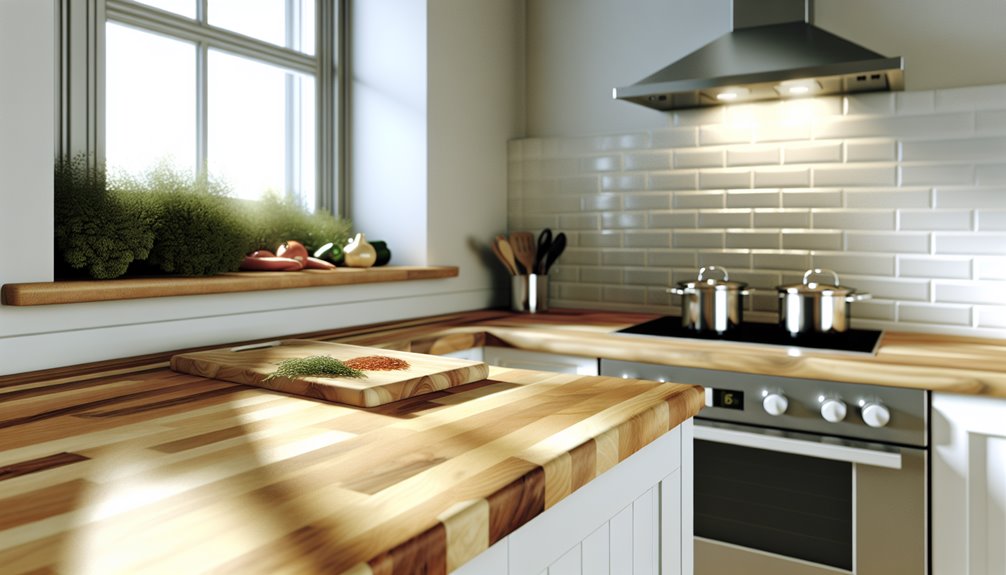
Butcher block countertops offer a stunning array of design options that can seamlessly blend with any kitchen aesthetic. Whether you're aiming for a rustic farmhouse vibe or a sleek modern finish, these countertops provide the flexibility you need.
You can choose from an impressive variety of wood types, such as maple, oak, or cherry, each bringing its unique grain pattern and warmth to your space.
When it comes to color combinations, butcher block countertops shine. You might opt for a rich, dark finish that creates a striking contrast against lighter cabinetry, or perhaps a lighter tone to keep the kitchen feeling airy and spacious.
Mixing and matching with other materials, like stainless steel or tile, can enhance this versatility even further.
Different design styles can also be complemented by butcher block. For traditional kitchens, a classic edge grain can evoke a sense of nostalgia, while a contemporary, end-grain design can add a touch of sophistication.
Sustainable Material Choice
Choosing butcher block countertops isn't just about aesthetics; it's also a commitment to sustainability. By opting for these surfaces, you're making a conscious decision to reduce your kitchen's environmental impact.
Butcher block is often crafted from hardwoods like maple, walnut, or cherry—materials sourced from renewable resources. Here are some key benefits:
- Renewable Materials: Most butcher blocks are made from sustainably harvested wood, ensuring minimal depletion of forests.
- Biodegradable: At the end of its life, wood decomposes naturally, reducing landfill waste.
- Low Carbon Footprint: The production of butcher block countertops generally requires less energy compared to synthetic alternatives.
- Durability: With proper care, these countertops can last for decades, minimizing the need for replacements and conserving resources.
- Natural Aesthetics: The organic look of wood complements eco-friendly designs, enhancing your kitchen's charm.
Enhanced Cooking Experience
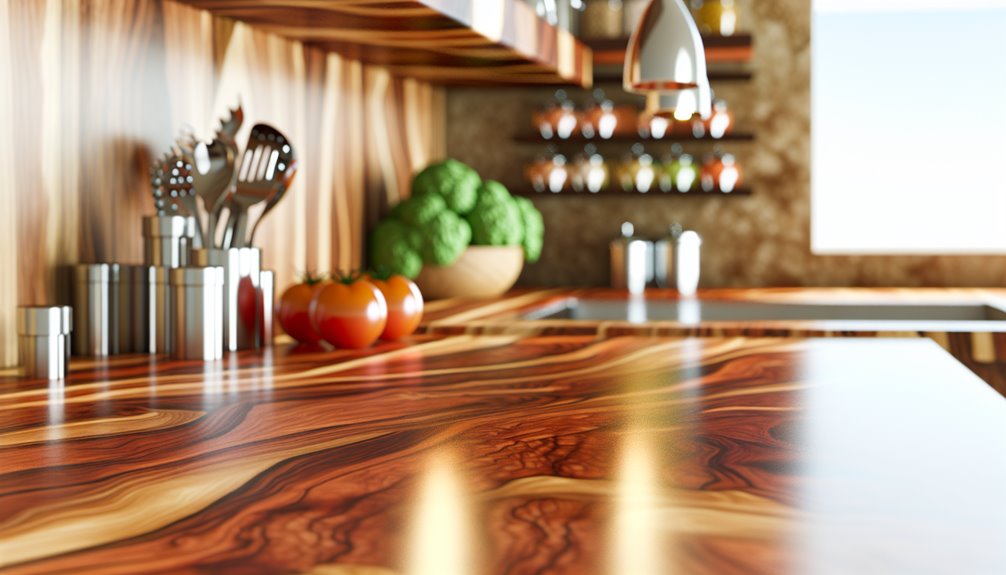
Cooking on a butcher block countertop transforms your culinary experience, turning meal prep into an art form. The warm, natural wood provides a tactile sensation that invites you to explore culinary creativity. Unlike cold, hard surfaces, butcher block offers a forgiving workspace, allowing you to chop, slice, and dice with ease. The slight give of the wood under your knife helps reduce strain on your wrists, enhancing your cooking comfort.
Moreover, the aesthetic appeal of butcher block inspires you to experiment with new ingredients and techniques. Its rich texture and grain add visual warmth to your kitchen, making it a welcoming environment for both casual cooks and culinary enthusiasts.
You'll find that the versatility of the surface lets you shift seamlessly from prepping vegetables to kneading dough, all while maintaining an organized space.
Butcher block countertops are also easy to clean and maintain, ensuring that your focus remains on the joy of cooking. With proper care, the surface will develop a unique patina over time, reflecting your culinary journey.
Cost-Effectiveness
With regard to kitchen upgrades, cost-effectiveness is an essential factor, and butcher block countertops stand out as a smart investment.
When weighing your options, consider how these surfaces can fit into your budget considerations while providing long-term value.
Here's why they excel in value comparison:
- Affordability: Butcher block is generally less expensive than granite or quartz.
- Longevity: With proper care, they can last for decades, minimizing replacement costs.
- Versatility: They can complement various kitchen styles, reducing the need for additional renovations.
- Repairability: Scratches and dents can often be sanded out, prolonging their lifespan.
- Sustainability: Many options are made from renewable resources, which can appeal to eco-conscious buyers.
Frequently Asked Questions
Can Butcher Block Countertops Be Refinished if Damaged?
Yes, you can refinish butcher block countertops if they're damaged.
For butcher block maintenance, start by sanding the surface with fine-grit sandpaper to remove imperfections.
After that, apply a food-safe mineral oil or a specialized wood finish to restore its luster.
Depending on the extent of the damage, you might also consider refinishing techniques like staining or adding a protective sealant.
This process not just rejuvenates the wood but also extends its life.
What Types of Wood Are Best for Butcher Block Countertops?
When considering the best wood types for butcher block countertops, you might think maple's the only option.
However, hardwoods like walnut and cherry offer stunning aesthetics and durability.
Maple alternatives like bamboo are also gaining popularity for their sustainability.
Each type has unique characteristics, so focus on your kitchen's style and your needs.
How Do Butcher Block Countertops Compare to Granite or Quartz?
When you compare butcher block countertops to granite or quartz, you'll notice some key differences.
Regarding durability, granite and quartz often win, resisting scratches and heat better than wood. However, butcher block offers a warm aesthetic and is easier to repair.
Maintenance differences are significant too—while granite and quartz require minimal upkeep, butcher block needs regular oiling to prevent drying.
Your choice fundamentally depends on your aesthetic preferences and willingness to maintain.
Are There Any Food Safety Concerns With Butcher Block Surfaces?
You might wonder about food safety on butcher block surfaces. Proper cleaning techniques are essential to prevent bacteria buildup.
After each use, make sure to wash the surface with hot, soapy water and dry it thoroughly.
For maintenance tips, regularly oil the wood to keep it hydrated and resistant to moisture.
Avoid soaking the block or using harsh chemicals, as these can damage the surface and compromise its safety for food preparation.
How Can I Prevent My Butcher Block From Warping?
To prevent your butcher block from warping, focus on moisture control and proper maintenance.
Regularly apply a food-safe mineral oil to seal the surface, keeping it hydrated and protected from moisture fluctuations.
Avoid soaking it in water or exposing it to extreme heat.
Additionally, always dry it thoroughly after cleaning.
Conclusion
Incorporating butcher block countertops into your kitchen not just elevates its aesthetic but also offers remarkable functionality. Did you know that with proper care, these surfaces can last over 20 years? Their natural beauty, coupled with antibacterial properties and sustainability, makes them a smart choice for any chef. Plus, their versatility complements any design style, ensuring your kitchen remains timeless and inviting. Embrace the charm and practicality of butcher block; your culinary adventures will thank you!