
The standard height for kitchen countertops usually ranges from 34 to 36 inches. Choosing the right height can make all the difference in your cooking comfort. For most people, 36 inches works best, but if you're shorter or taller, you might prefer 34 or 39 inches. Consider your primary cooking tasks too; areas for baking may need lower surfaces, while chopping might benefit from a bit more height. Don't forget about the thickness of your countertop material, as that can affect usability. Curious about more tips for customizing your kitchen space? There's plenty more to explore!
Importance of Countertop Height
In relation to your kitchen, the height of your countertops plays an essential role in how you interact with the space. It directly affects countertop functionality and your overall cooking experience. When your countertops are at the right height, chopping vegetables, kneading dough, or mixing ingredients feels effortless.
You'll notice how much smoother your meal prep becomes, enhancing both efficiency and enjoyment.
Think about your user preferences. If you're shorter or taller than average, a standard height mightn't serve you well. Customizing the height allows for a comfortable posture while you work, reducing strain on your back and arms.
Imagine effortlessly stirring a pot or rolling out pastry without feeling like you're reaching for the sky—or crouching to the ground.
Additionally, the height can influence the design of your kitchen, complementing your personal style. A raised countertop can create a casual dining area, while a lower one can encourage more interaction with guests.
Ultimately, paying attention to countertop height guarantees that your kitchen becomes a space where functionality meets your unique needs, making every cooking experience a pleasure instead of a chore.
Standard Height Measurements
In terms of standard height measurements for kitchen countertops, knowing typical dimensions is just the start.
You might also want to explore adjustable height options to cater to your specific needs.
Plus, considering ergonomics can make all the difference in how comfortable your kitchen experience feels.
Typical Countertop Dimensions
Finding the right height for kitchen countertops can make all the difference in your cooking experience. Standard countertop heights typically range from 34 to 36 inches, catering to a variety of kitchen styles and user preferences. If you're tall, you might prefer something closer to 36 inches, while shorter folks may find 34 inches more comfortable.
When choosing countertop materials, consider how the thickness impacts the overall height. For instance, a thick butcher block can raise your countertop's height slightly, while thinner materials like laminate mightn't change it much.
Additionally, if you have a multi-functional kitchen, you might want to incorporate varying heights. A raised bar area or an island can provide an ideal spot for casual dining or entertaining.
Pay attention to your workflow in the kitchen. If you're often chopping, mixing, or kneading, you'll appreciate a countertop that feels just right for your height.
In the end, selecting the right dimensions not only enhances the aesthetic of your kitchen but also improves your cooking efficiency. Remember, it's all about creating a harmonious space that feels just as good to work in as it looks!
Adjustable Height Options
Adjustable height options for kitchen countertops offer a versatile solution for homeowners seeking both comfort and functionality. These options cater to a variety of needs, whether you're prepping meals, entertaining guests, or simply enjoying a casual breakfast.
One popular choice is adjustable stands, which allow you to modify the height of your countertop effortlessly. Imagine hosting a gathering and easily raising your countertop to create an ideal buffet setup. They can also be fixed into place once you find the perfect height, ensuring stability during use.
Height converters are another practical solution. These devices can be installed beneath your existing countertop, giving you the flexibility to switch between standard and higher elevations. With a simple adjustment, you can accommodate different tasks, whether you're chopping vegetables or rolling out dough.
When you invest in adjustable height options, you're not just enhancing your kitchen's functionality; you're also making it accessible for everyone, from family members to guests.
Embracing these innovative solutions allows you to create a kitchen that adapts to your lifestyle and preferences, ensuring that every meal preparation becomes a delight.
Consideration for Ergonomics
Creating a kitchen that not just looks great but also feels comfortable means paying close attention to ergonomics, especially regarding countertop heights.
You want to guarantee that your kitchen promotes user accessibility and kitchen comfort, making it a joy to cook and entertain.
Here are four key considerations for ergonomic countertop heights:
- Standard Heights: Most countertops are around 36 inches high, which suits the average user for various tasks.
- Task-Specific Areas: Consider lowering or raising sections for specific tasks, like a baking station at 30 inches for easier dough handling.
- User Height: Tailor the height based on the primary users. If you're taller or shorter than average, adjustments may enhance comfort.
- Seating Arrangements: If you have an island, guarantee the height accommodates bar stools or dining chairs, typically 42 inches for bar height.
Factors Affecting Countertop Height
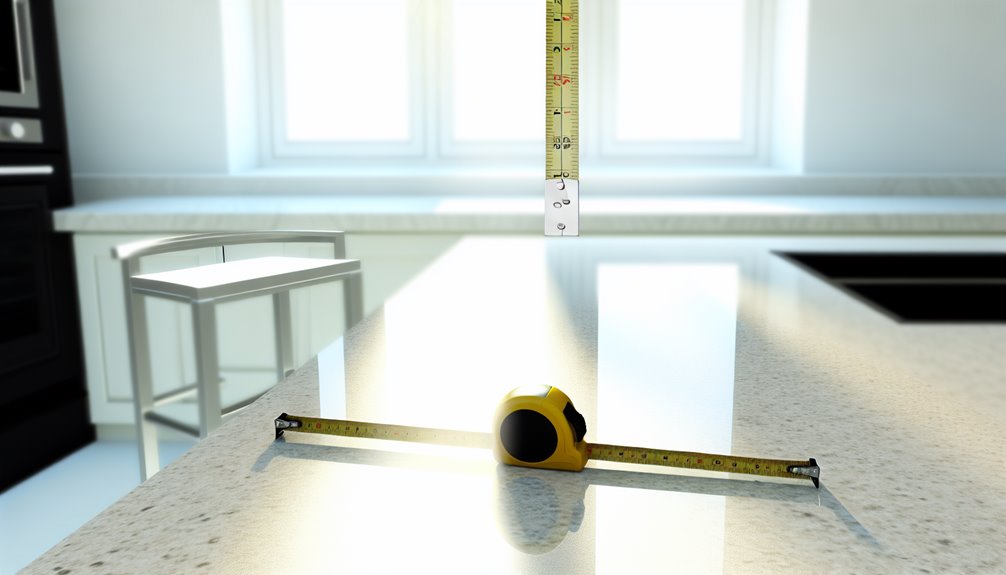
When planning your kitchen layout, several factors influence the ideal countertop height. First, think about your personal height and reach. A countertop that's too high or too low can make cooking and prep work uncomfortable, so it's essential to find a height that suits you.
Next, consider the type of countertop materials you'll use. Different materials can create varying visual and tactile experiences. For instance, if you're opting for natural stone, you might want to account for its thickness, which can subtly affect the overall height.
The kitchen design also plays a significant role in determining the right countertop height. If you're integrating different zones, such as a breakfast bar or an island, you may want to adjust heights to create a seamless flow.
Lastly, keep in mind how you'll use your kitchen. If you bake frequently, you might prefer a slightly lower surface for rolling dough.
Customizing Kitchen Countertops
With a solid understanding of factors affecting countertop height, you can now explore the exciting possibilities of customizing your kitchen countertops.
Custom countertop designs give you the freedom to create a space that truly reflects your style and meets your needs. Here are some key considerations when customizing your countertops:
- Material Selection: Choose from a variety of materials like granite, quartz, or butcher block that suit your aesthetic and functional requirements.
- Color and Finish: Consider colors and finishes that complement your kitchen decor, whether it's a sleek modern look or a rustic farmhouse vibe.
- Personalized Height Adjustments: Don't just settle for standard heights; adjust your countertops to a height that feels comfortable and ergonomic for you.
- Additional Features: Think about integrating features like built-in cutting boards, pop-up outlets, or even a raised breakfast bar for added functionality.
Ergonomic Considerations
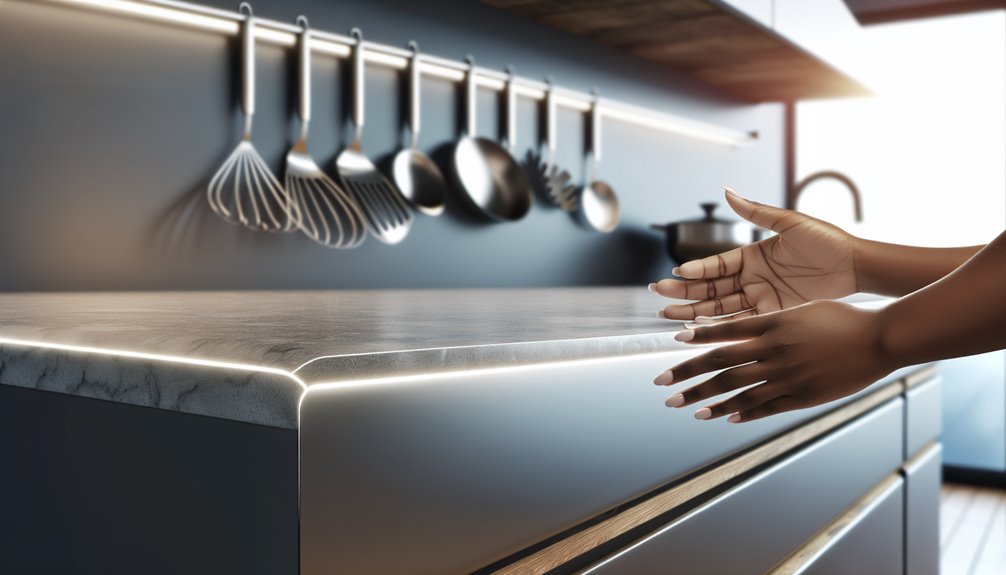
Ergonomic considerations play an essential role in designing a kitchen that works for you. When you think about countertop height, it's not just about aesthetics; it's about how you interact with your space. An ergonomic design guarantees that you can prep, cook, and clean without straining your body.
Imagine chopping vegetables at a countertop that's too high or too low—it can lead to discomfort and even injury over time. Aim for a height that allows your elbows to remain at a comfortable angle while you work. Ideally, you want your counter to be around waist level for peak user comfort, especially during extended cooking sessions.
Consider your personal height and any specific needs you might have. If you're often standing for long periods, a slightly lower countertop can alleviate back strain, while a higher one may suit taller individuals better.
Don't forget about your kitchen tools; make sure they're easily accessible without requiring awkward bending or stretching.
Tips for Choosing Height
Finding the right height for your kitchen countertops can greatly enhance your cooking experience.
You'll want to take into account a few factors that align with your personal needs and kitchen workflow. Here are some tips to help you choose the perfect height:
- User Height: Measure the heights of everyone who frequently cooks in your kitchen. A countertop height between 36-39 inches usually works for most, but personal preference is key.
- Countertop Materials: Different materials can alter the feel of your countertops. For example, thicker granite might feel higher, while laminate can create a lower profile. Choose materials that complement your chosen height.
- Task-Specific Areas: If you bake often, think about a lower height for a pastry station, while a slightly higher area might be ideal for chopping vegetables. Tailoring sections of your kitchen can optimize your workflow.
- Seating Considerations: If you plan to include bar stools or seating, make certain your countertop height accommodates them comfortably, usually around 42 inches for bar height.
Frequently Asked Questions
What Materials Are Best for Kitchen Countertops?
When choosing materials for your kitchen countertops, granite and quartz stand out.
Granite offers unparalleled durability, perfect for those who value longevity. Its natural beauty adds a unique touch to your kitchen.
On the other hand, quartz requires less maintenance, making it ideal if you're looking for convenience.
Both options provide stunning aesthetics, but your decision should hinge on whether you prioritize durability or ease of upkeep.
You can't go wrong with either choice!
How Can I Adjust Countertop Height After Installation?
If you need to adjust your countertop height after installation, you've got a few options.
Start with countertop modifications like adding risers or adjusting the cabinetry underneath. You can also consider replacing the base or legs if your setup allows for it.
For a more dramatic change, think about replacing the entire countertop.
Just remember, it's essential to guarantee stability and aesthetics when making those height adjustments for a seamless look!
Are There Different Heights for Commercial Kitchens?
Yes, there are different heights for commercial kitchens, often influenced by counter height regulations.
These regulations guarantee that workspace ergonomics are prioritized, making it easier for staff to work efficiently.
In a bustling kitchen, you might find varying heights for prep areas, cooking stations, and service counters.
Tailoring these spaces to specific tasks enhances productivity and comfort, allowing you to create an environment where everyone can perform at their best.
What Are the Costs Associated With Custom Countertop Heights?
So, you think custom heights come cheap, huh? Well, buckle up!
Custom height pricing can vary wildly, depending on materials and design. Expect countertop installation costs to range from a few hundred to several thousand dollars.
You're not just paying for a surface; you're investing in your comfort and style. Remember, the taller the dreams, the heftier the bill.
Choose wisely and get ready to enjoy your culinary kingdom!
Can Countertop Height Affect Kitchen Workflow?
Absolutely, countertop height can greatly affect your kitchen workflow.
When you're working at the right height, you'll notice improved workflow efficiency, as tasks become easier and quicker to perform. An ergonomic design minimizes strain on your back and arms, allowing you to move seamlessly between prep, cooking, and cleaning.
If your counters are too high or low, you could find yourself making unnecessary movements, slowing down the process and affecting your overall kitchen experience.
Conclusion
In the end, choosing the right countertop height is like finding the perfect key to access your kitchen's potential. It's not just about aesthetics; it's about creating a space where cooking feels effortless and joy flows as freely as the aromas of your favorite dishes. So, whether you stick to the standard or venture into custom territory, remember that your comfort and creativity should reign supreme. After all, a well-designed kitchen is the heart of your home!